
Feeling anxious before a medication abortion is far more common than many people realize. Whether you’re worried about pain, bleeding, privacy, or simply the uncertainty of what lies ahead, these emotions are a natural response to an unfamiliar experience. Many people describe feeling a mix of nervousness, relief, sadness, confidence, or even all of these emotions at once. There is no “right” way to feel, and your emotional experience is just as personal as your physical one.
The good news is that anxiety often becomes more manageable once you know what to expect and prepare ahead of time. Having a clear understanding of the medication abortion process, gathering the right supplies, and creating a supportive environment can help you feel more in control from the very beginning.
In this guide, we’ll discuss practical, evidence-based ways to manage anxiety before and during a medication abortion, along with tips for recognizing what’s normal and when it’s appropriate to reach out to a healthcare provider.
Quick Answer
Feeling anxious before or during a medication abortion is completely normal. Many people worry about pain, bleeding, privacy, or whether the medication will work. Preparing ahead by learning what to expect, creating a comfortable recovery space, gathering essential supplies, and having a trusted support person or healthcare provider available can help reduce anxiety. Understanding which symptoms are expected—and which require medical attention—can also help you feel more confident and in control throughout the process.
Why Managing Anxiety Before Medication Abortion Matters
Anxiety isn’t simply “being nervous.” It can affect both your mind and your body. When you’re feeling anxious, your body releases stress hormones that may make physical symptoms feel more intense. Cramping can seem stronger, your heart may race, and you may find yourself constantly worrying about whether everything is happening normally.
For many people, the biggest source of anxiety isn’t the medication itself—it’s the uncertainty surrounding the experience. Questions such as:
- Will it hurt more than I expect?
- How much bleeding is normal?
- What if the medication doesn’t work?
- Will I know if something is wrong?
- Should someone stay with me?
These concerns are understandable. Fortunately, most of them can be addressed through preparation and reliable information.
Understanding what typically happens during a medication abortion often helps replace fear of the unknown with realistic expectations. While every person’s experience is different, knowing what symptoms are considered normal can make the process feel much less overwhelming.
It’s also important to remember that experiencing anxiety does not mean you’re making the wrong decision. Many people feel anxious before medical procedures—even routine ones—simply because they involve uncertainty. Feeling nervous and feeling confident can exist at the same time.
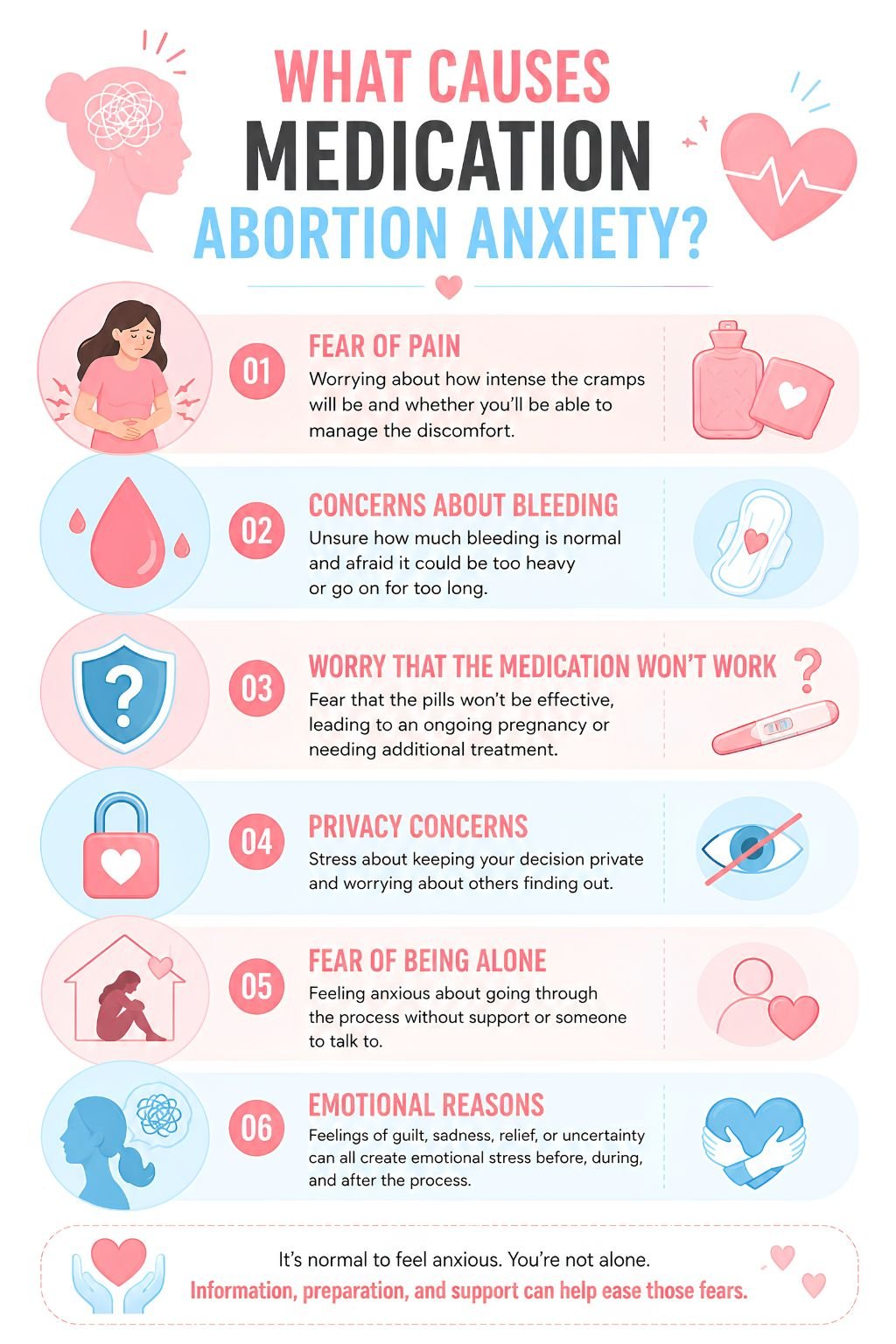
What Causes Medication Abortion Anxiety?
There isn’t one single reason people experience anxiety before taking abortion pills. Instead, several concerns often come together.
Fear of Pain
One of the most common worries involves cramping. Since medication abortion works by causing the uterus to contract and expel the pregnancy tissue, cramping is expected. However, not knowing how intense those cramps will feel can make people anxious before they even begin.
While many describe the cramps as heavier than a typical menstrual period, experiences vary widely from person to person. Having an approved pain management plan in place beforehand can help reduce this uncertainty.
Concerns About Bleeding
Bleeding is another major concern. Reading stories online without context can sometimes make people expect the worst.
In reality, moderate to heavy bleeding during a medication abortion is generally expected and is part of how the medications work. The amount, duration, and appearance of bleeding differ from person to person, which is why following your healthcare provider’s instructions is important.
Knowing the difference between expected bleeding and symptoms that require medical attention can greatly reduce unnecessary worry.
Worry That the Medication Won’t Work
Many people wonder whether the medication will be effective.
Medication abortion has a high success rate when used appropriately according to medical guidance. Understanding the expected timeline and follow-up recommendations can help ease concerns about whether the process is progressing normally.
Privacy Concerns
Privacy is another significant source of stress.
Some individuals worry about receiving medication discreetly, finding private time to complete the process, or explaining their absence from work or school. Others simply want to keep their healthcare decisions personal.
Planning ahead—choosing a quiet day, arranging childcare if needed, and ensuring you have a comfortable place to rest—can help minimize these concerns.
Fear of Being Alone
Some people worry that they won’t have enough support if they need it.
While many individuals prefer having a trusted friend, partner, or family member nearby, others feel most comfortable going through the process privately. Both experiences are valid.
Even if you choose privacy, it can still be reassuring to have someone available by phone or know how to contact your healthcare provider if questions arise.
Emotional Reasons
Not all anxiety comes from physical concerns.
People may experience conflicting emotions related to personal beliefs, relationship dynamics, timing of the pregnancy, previous pregnancy experiences, or life circumstances. Feeling emotional does not necessarily predict how you’ll feel afterward, and emotional responses vary widely.
Giving yourself permission to experience whatever emotions arise—without judging them—can be an important part of caring for your mental well-being.
Managing Anxiety Before Medication Abortion Starts
Preparation is one of the most effective ways to reduce anxiety. Small steps taken before you begin can help the entire experience feel more predictable and organized.
Learn What to Expect
One of the best ways to reduce fear is to understand the process beforehand.
Review your abortion pill instructions carefully and become familiar with:
- When to take each medication
- When cramping and bleeding usually begin
- Typical side effects
- Expected recovery timeline
- Warning signs that require medical attention
Knowing what’s normal helps prevent every symptom from becoming a source of unnecessary worry.
Prepare Your Recovery Space
Creating a calm environment beforehand allows you to focus on resting rather than searching for supplies while symptoms begin.
Consider gathering:
- Maxi pads
- A heating pad or hot water bottle
- Comfortable clothing
- Blankets and pillows
- Water and electrolyte drinks
- Easy-to-eat snacks
- Recommended pain relief medication
- Phone charger
- Books, movies, podcasts, or calming music
Having everything within easy reach provides both physical comfort and peace of mind.
Choose a Low-Stress Day
If possible, schedule your medication abortion for a day when you have few obligations.
Taking time away from work, school, or household responsibilities allows you to rest without feeling pressured to continue your normal routine. If you have children, arranging childcare in advance can also make the experience less stressful.
Preparing your schedule ahead of time helps you focus on recovery rather than interruptions.
How to Stay Calm During a Medication Abortion
Once you begin taking the medication, it’s natural for your anxiety to rise as you wait for symptoms to start. Many people notice that anticipation is actually more stressful than the experience itself. Remember that every cramp, every episode of bleeding, and every emotional shift doesn’t necessarily mean something is wrong—these are expected parts of how the medication works.
Instead of focusing on what might happen next, try concentrating on one moment at a time.
Practice Simple Breathing Techniques
When anxiety builds, your breathing often becomes quick and shallow, which can make you feel even more overwhelmed.
A simple breathing exercise can help calm your nervous system:
- Inhale slowly through your nose for four seconds.
- Hold your breath for two seconds.
- Exhale gently through your mouth for six seconds.
- Repeat for several minutes.
This technique won’t eliminate discomfort, but it can reduce the physical symptoms of anxiety and help you regain a sense of control.
Use Grounding Exercises
If your mind begins racing, grounding techniques can help bring your attention back to the present.
One commonly used method is the 5-4-3-2-1 technique:
- Identify five things you can see.
- Four things you can touch.
- Three things you can hear.
- Two things you can smell.
- One thing you can taste.
This simple exercise can interrupt anxious thought patterns and help you refocus on your surroundings.
Make Yourself Comfortable
Small comfort measures often make a meaningful difference during recovery.
Many people find relief by:
- Using a heating pad on the lower abdomen
- Wearing loose, comfortable clothing
- Resting with pillows for support
- Drinking water regularly
- Eating light meals or snacks if tolerated
- Watching a favorite movie or TV show
- Listening to calming music or podcasts
These activities won’t stop cramping, but they can make the experience feel less overwhelming by helping your body relax.
Emotional Support During Medication Abortion
While physical preparation is important, emotional support can be just as valuable.
Some people want a trusted partner, family member, or close friend nearby throughout the process. Others prefer privacy but appreciate knowing someone is available by phone if needed.
There isn’t one “correct” approach. The right choice depends on what makes you feel safest and most comfortable.
If you’re using telehealth services, ask whether your provider offers a nurse line or follow-up support if questions come up during the process. Simply knowing professional guidance is available can reduce anxiety significantly.
Remember that emotional reactions vary widely. Some people feel relief almost immediately. Others experience sadness, uncertainty, or a combination of emotions. These responses are all normal and don’t necessarily reflect whether you’ve made the right decision.
Avoid comparing your emotional experience with stories you’ve read online. Everyone processes significant life events differently.
Managing Unexpected Anxiety During Medication Abortion
Even with careful preparation, moments of anxiety can still happen.
If you suddenly feel overwhelmed:
- Pause for a few minutes.
- Focus on slow breathing.
- Drink a glass of water.
- Apply your heating pad.
- Change to a more comfortable position.
- Remind yourself that cramping and bleeding are expected parts of the process.
Sometimes simply reviewing your provider’s instructions can reassure you that your symptoms are progressing normally.
However, if you’re unsure whether what you’re experiencing is expected, don’t hesitate to contact your healthcare provider. Asking questions isn’t overreacting—it’s part of taking care of yourself.
Knowing What’s Normal Can Reduce Anxiety
One of the most effective ways to ease anxiety is understanding what symptoms are usually expected during a medication abortion.
Common experiences include:
- Moderate to heavy bleeding
- Cramping that may be stronger than a typical period
- Passing blood clots
- Temporary chills
- Mild nausea
- Vomiting or diarrhea
- Fatigue
- Lightheadedness for a short time
These symptoms occur because the medications are causing the uterus to empty, and they generally improve over time.
Knowing that these experiences are common can prevent unnecessary worry each time a new symptom appears.
When Anxiety May Be More Than Temporary Stress
For some people, anxiety is more intense because of previous experiences with anxiety disorders, panic attacks, depression, or trauma.
If this describes you, consider discussing your concerns with your healthcare provider before beginning the medication. Together, you can develop a plan that may include:
- Extra follow-up support
- Personalized pain management recommendations
- Someone to check in with during recovery
- Mental health resources if needed
Seeking support before your medication abortion isn’t a sign of weakness—it’s a proactive step toward caring for both your physical and emotional health.
Practical Coping Strategies That Many People Find Helpful
In addition to preparing physically, these small habits may help reduce stress throughout the experience:
- Write down reassuring reminders before you begin.
- Limit time spent reading frightening stories on social media.
- Keep emergency contact numbers nearby so you don’t have to search for them later.
- Stay hydrated throughout the day.
- Eat small meals if your stomach allows.
- Plan something comforting for afterward, such as your favorite meal, a relaxing shower, or extra time to rest.
- Give yourself permission to recover without feeling guilty about taking a break from daily responsibilities.
Many people find that simply having a plan helps them feel more confident before taking the medication.
When Should You Contact a Healthcare Provider?
Although most medication abortions are completed without serious complications, it’s important to recognize symptoms that require medical attention.
Contact your healthcare provider promptly if you experience:
- Soaking through two or more large maxi pads per hour for two consecutive hours
- Severe pain that does not improve with recommended pain medication
- A fever of 100.4°F (38°C) or higher that persists beyond the expected timeframe after taking misoprostol
- Foul-smelling vaginal discharge
- Fainting, severe weakness, or difficulty breathing
- Little or no bleeding when your healthcare provider expected bleeding to occur
Remember, reaching out doesn’t automatically mean something is wrong. Sometimes the reassurance of speaking with a medical professional is exactly what you need.
Choosing a Reliable Provider Can Ease Anxiety
One often-overlooked way to reduce anxiety is choosing a provider that offers clear guidance before, during, and after your medication abortion.
Reliable providers typically offer:
- Detailed medication instructions
- Information about expected symptoms
- Guidance on pain management
- Access to support if questions arise
- Discreet shipping and privacy protections
- Follow-up recommendations
Knowing you have access to accurate information and professional support can make the experience feel far less uncertain.
If you’re looking for a private way to access medication abortion, Abortion Pills in Private offers abortion pill kits for a $95 flat fee, along with clear instructions, discreet shipping, and ongoing support throughout the process. Whether you have questions before taking the medication or during recovery, having dependable guidance can provide valuable peace of mind.
Order Abortion Pills Online by Mail – Safe & Discreet Delivery
Key Takeaways
- Anxiety before a medication abortion is common and often stems from uncertainty, fear of pain, privacy concerns, or emotional stress.
- Preparation can reduce anxiety. Read your medication instructions, gather recovery supplies, and plan for a day of rest before taking the pills.
- Comfort measures make a difference. A heating pad, hydration, light snacks, recommended pain relief, and relaxation techniques can help you manage both physical discomfort and stress.
- Emotional support is valuable. Whether it’s a trusted friend, family member, partner, or healthcare provider, having someone available can provide reassurance throughout the process.
- Most symptoms are expected. Cramping, bleeding, passing clots, mild nausea, chills, and fatigue are common during a medication abortion.
- Know the warning signs. Contact a healthcare provider if you experience excessive bleeding, severe pain that doesn’t improve, persistent fever, foul-smelling discharge, fainting, or other concerning symptoms.
- Choose a reliable provider. Clear instructions, access to support, and trustworthy follow-up guidance can help ease anxiety and make the experience feel more manageable.
- Every emotional response is valid. You may feel relief, sadness, anxiety, or a combination of emotions. There is no “right” way to feel, and your experience is unique.
Final Thoughts
Feeling anxious before or during a medication abortion is completely understandable. Much of that anxiety comes from uncertainty, and one of the best ways to ease it is through preparation, reliable information, and realistic expectations.
Take time to prepare your recovery space, gather the supplies you’ll need, understand what symptoms are normal, and arrange support in whatever way feels right for you. Remember that every experience is unique, and your emotional response is valid.
Most importantly, you don’t have to navigate the process alone. Whether it’s a trusted friend, a healthcare provider, or a reliable abortion care service, having support available can help you feel more confident every step of the way.
Disclaimer: This article is intended for educational purposes only and should not be considered medical advice. Always follow the instructions provided by your healthcare provider. Abortion laws vary by U.S. state and may change over time, so it’s important to review the regulations that apply where you live.
About the Author

Caroline*
Caroline M. Hayes is a healthcare content specialist and writer with a focus on women’s health and patient education. With experience across telehealth and in-person care environments, she creates content that helps individuals better understand their health and make informed decisions with confidence.
Her work focuses on simplifying complex medical topics into clear, accessible, and easy-to-understand information—especially in areas that require sensitivity, privacy, and clarity. She contributes to educational resources designed to support individuals navigating important health choices.
Caroline’s approach combines accuracy, empathy, and clarity, ensuring that health information is both reliable and approachable for a wide audience.
Outside of her professional work, she enjoys yoga, reading, and caring for her growing collection of plants.
All content is created for informational purposes and reviewed to ensure clarity and accuracy
*Name has been changed to protect privacy.*