
Quick Summary
- Medication abortion usually involves mifepristone and misoprostol.
- Most people experience heavy bleeding and cramping within 1–4 hours after taking misoprostol.
- Common abortion pill symptoms include bleeding, blood clots, cramps, nausea, chills, and fatigue.
- The heaviest symptoms often improve within 24 hours.
- Light bleeding or spotting may continue for 2–4 weeks.
- Seek medical care for extremely heavy bleeding, severe pain, fever, or signs of infection.
- Most people return to normal daily activities within a couple of days.
Introduction
Choosing a medication abortion can come with a lot of questions, especially if it’s your first time. Many people want to know what the experience actually feels like, how much bleeding is normal, how long symptoms last, and when they should be concerned. Reading mixed stories online can make the process feel more overwhelming than it needs to be.
The good news is that medication abortion is a medically researched and widely used option for ending an early pregnancy. Knowing what to expect after taking abortion pill medications can help reduce fear, prepare you for the process, and make recovery feel more manageable.
In most cases, the abortion pill process involves two medications: mifepristone and misoprostol. Together, they work to end the pregnancy and help the uterus empty naturally. While everyone’s abortion pill experience is slightly different, there are common symptoms, timelines, and recovery patterns most people can expect.
This guide explains the medical abortion process step by step, including abortion pill symptoms, bleeding and cramping expectations, recovery timelines, comfort tips, and warning signs that require medical attention.
What to Expect After Taking Abortion Pill Step by Step
For many people, the unknown is the scariest part. Understanding the process beforehand can make the experience feel less stressful and easier to navigate.
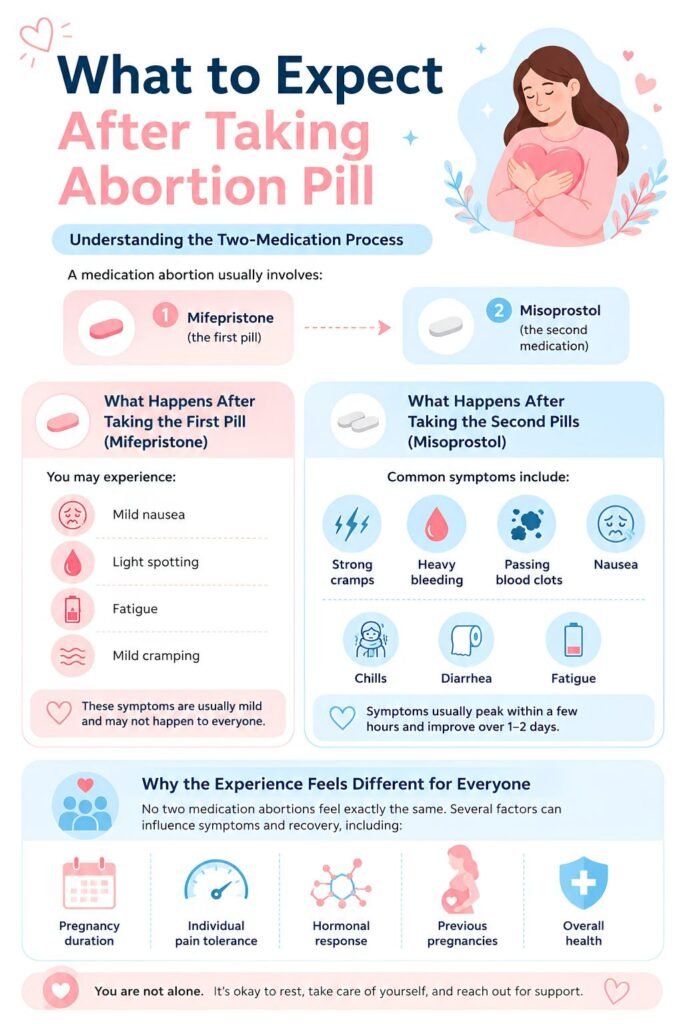
Understanding the Two-Medication Process
A medication abortion usually involves:
- Mifepristone (the first pill)
- Misoprostol (the second medication)
Mifepristone works by blocking progesterone, the hormone needed to continue a pregnancy. Misoprostol then causes the uterus to contract and empty the pregnancy tissue.
Together, these medications safely complete the medical abortion process for most pregnancies in the early weeks.
What Happens After Taking the First Pill (Mifepristone)
Most people are surprised by how little they feel after taking mifepristone. In many cases, there are no major physical symptoms immediately afterward.
You may experience:
- Mild nausea
- Light spotting
- Fatigue
- Mild cramping
However, many people continue normal activities like work, errands, or resting at home without interruption.
Because the first pill usually does not cause intense symptoms, some people worry it is not working. That concern is common, but most of the noticeable abortion pill symptoms typically begin after taking misoprostol.
What Happens After Taking the Second Pills (Misoprostol)
Misoprostol is the medication that causes the uterus to contract and empty. This is the stage where most people begin experiencing heavier bleeding and cramping.
Symptoms often begin within 1 to 4 hours after taking the medication.
Common symptoms include:
- Strong cramps
- Heavy bleeding
- Passing blood clots
- Nausea
- Chills
- Diarrhea
- Fatigue
The heaviest part of the abortion pill experience usually happens during the first several hours after misoprostol. Many people describe it as similar to an early miscarriage or an extremely heavy period.
Passing blood clots and tissue is normal during this stage. Some clots can be large, especially in pregnancies further along within the approved timeframe.
Why the Experience Feels Different for Everyone
No two medication abortions feel exactly the same. Several factors can influence symptoms and recovery, including:
- Pregnancy duration
- Individual pain tolerance
- Hormonal response
- Previous pregnancies
- Overall health
Some people experience intense cramping for several hours, while others describe symptoms as manageable with rest and pain medication.
Reading dramatic stories online can sometimes create unnecessary fear. Many people have smoother experiences than expected, especially when they know how to prepare beforehand and understand what symptoms are considered normal.
Normal Abortion Pill Symptoms and Side Effects
One of the most common questions people ask is whether their symptoms are normal. In most cases, bleeding and cramping are expected signs that the medications are working.
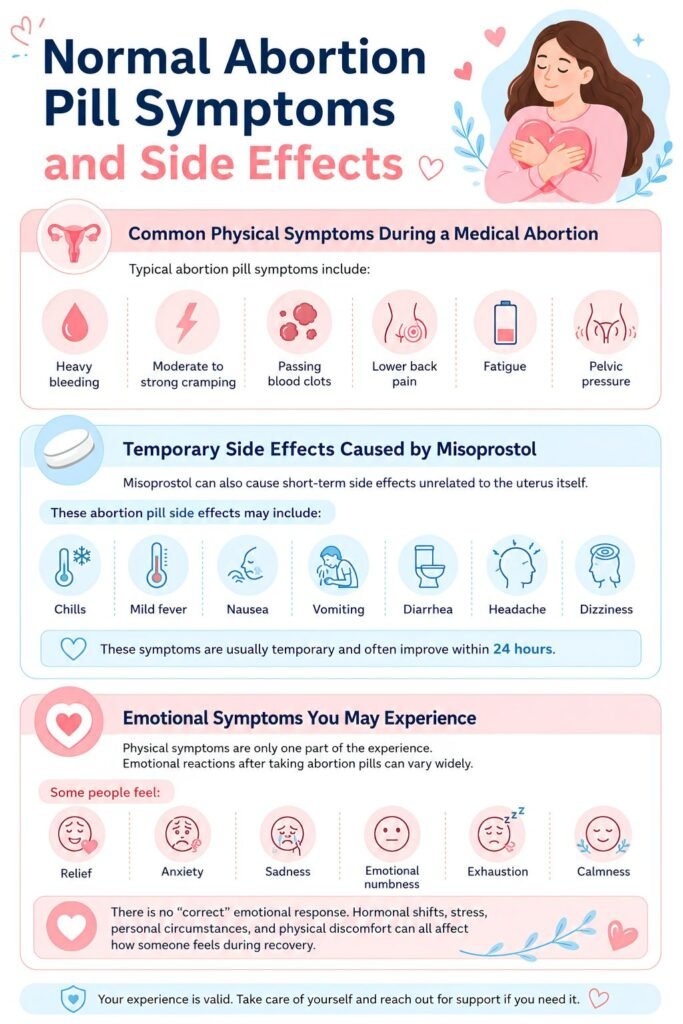
Common Physical Symptoms During a Medical Abortion
Typical abortion pill symptoms include:
- Heavy bleeding
- Moderate to strong cramping
- Passing blood clots
- Lower back pain
- Fatigue
- Pelvic pressure
The intensity often peaks while the uterus is actively passing pregnancy tissue. After this stage, symptoms usually begin improving gradually.
Cramping can sometimes feel stronger than a regular period. For some people, the discomfort comes in waves as the uterus contracts.
Temporary Side Effects Caused by Misoprostol
Misoprostol can also cause short-term side effects unrelated to the uterus itself.
These abortion pill side effects may include:
- Chills
- Mild fever
- Nausea
- Vomiting
- Diarrhea
- Headache
- Dizziness
These symptoms are usually temporary and often improve within 24 hours.
Many people worry something is wrong when chills or diarrhea begin, but these reactions are common with misoprostol and typically resolve on their own.
Emotional Symptoms You May Experience
Physical symptoms are only one part of the experience. Emotional reactions after taking abortion pills can vary widely.
Some people feel:
- Relief
- Anxiety
- Sadness
- Emotional numbness
- Exhaustion
- Calmness
There is no “correct” emotional response. Hormonal shifts, stress, personal circumstances, and physical discomfort can all affect how someone feels during recovery.
Creating a quiet, comfortable environment can make the process feel emotionally easier for many people.
Also read: Does abortion pill affect hormones
What to Expect After Taking Abortion Pill During the First 24 Hours
The first day after taking misoprostol is usually the most intense part of the process. Knowing the typical timeline can help you feel more prepared.
The First Few Hours After Misoprostol
Most people begin bleeding and cramping within 1 to 4 hours.
The process often follows this pattern:
- Hour 1–4: Cramping and bleeding begin
- Hour 2–6: Bleeding becomes heavier and cramps intensify
- After tissue passes: Symptoms gradually ease
Because symptoms can become intense quickly, many people prefer staying home near a bathroom with supplies ready beforehand.
How Heavy Is Normal Bleeding?
Abortion pill bleeding and cramping are usually heavier than a normal menstrual period.
It is common to:
- Soak through pads more quickly
- Pass blood clots
- Experience bleeding that comes in waves
Some clots may be large. This can look alarming, but it is often part of the normal medical abortion process.
Heavy bleeding usually slows significantly after the pregnancy tissue passes. Lighter bleeding or spotting may continue for several weeks afterward.
How Painful Are the Cramps?
Cramping intensity varies from person to person.
Some people describe the cramps as:
- Strong menstrual cramps
- Deep pelvic pressure
- Sharp waves of pain
- Similar to miscarriage contractions
The most painful phase often lasts a few hours rather than the entire recovery period.
Using a heating pad, resting, and taking ibuprofen can help make symptoms more manageable.
Also read: Can the Abortion Pill Affect Fertility?
How to Prepare for the Abortion Pill Experience at Home
Preparing ahead of time can make the process feel less stressful and more comfortable.
What Supplies to Have Ready
Before taking misoprostol, it helps to have:
- Thick maxi pads
- Comfortable clothes
- Heating pad or hot water bottle
- Water or electrolyte drinks
- Easy-to-digest snacks
- Pain medication recommended by your provider
Many people also prefer setting up a comfortable recovery space near a bathroom.
When to Take Pain Medication
Many clinicians recommend taking ibuprofen about 30 minutes before misoprostol to help reduce cramping intensity.
Avoid aspirin unless specifically instructed otherwise, since it can increase bleeding.
Some online abortion care providers also include step-by-step aftercare instructions and clinician support, which can help first-time users feel more confident during the process.
Should Someone Stay With You?
Some people prefer privacy, while others feel more comfortable having a trusted friend, partner, or support person nearby.
If possible, consider:
- Having someone check in by phone
- Arranging childcare ahead of time
- Taking time away from work or responsibilities
- Planning for rest afterward
Reducing stress beforehand can make the experience feel physically and emotionally easier.
Foods and Drinks That May Help
Because nausea and cramping are common, bland foods may feel easier to tolerate.
Helpful options may include:
- Toast
- Soup
- Crackers
- Rice
- Herbal tea
- Electrolyte drinks
Staying hydrated is especially important if diarrhea or vomiting occurs.
Abortion Pill Recovery Timeline: What Happens in the Days and Weeks After
After the most intense symptoms pass, many people wonder how long recovery actually takes. While the heaviest bleeding and cramping usually improve within the first 24 hours, lighter symptoms can continue for several weeks as the body returns to its normal state.
Understanding the abortion pill recovery timeline can help you know what is expected and when follow-up care may be necessary.
What to Expect the Next Day
For most people, the day after taking misoprostol feels significantly easier than the first several hours.
You may still experience:
- Mild cramping
- Light to moderate bleeding
- Fatigue
- Emotional exhaustion
- Occasional passing of small clots
However, many people feel well enough to:
- Return to work
- Resume normal daily activities
- Leave the house comfortably
- Eat regular meals again
Even if symptoms improve quickly, it is still important to rest when possible and stay hydrated.
Bleeding and Spotting Over the Next Few Weeks
One of the most common concerns after a medication abortion is ongoing bleeding.
Light bleeding or spotting can continue for:
- 2 to 4 weeks
- Sometimes longer in some cases
The bleeding may:
- Stop and restart
- Become heavier temporarily
- Change from bright red to brown
- Include occasional small clots
This pattern is usually part of the normal healing process.
Some people become worried when bleeding suddenly increases again after slowing down. Mild fluctuations are common as the uterus continues clearing tissue and returning to its pre-pregnancy size.
When Your Period Usually Returns
Most people get their next menstrual period within:
- 4 to 8 weeks after the abortion
Hormone levels gradually decrease during recovery, and cycles can be temporarily irregular afterward.
Your first period may feel:
- Heavier than usual
- More crampy
- Slightly delayed
That does not automatically mean something is wrong.
Pregnancy Symptoms After the Abortion Pill
Pregnancy symptoms usually fade gradually after a successful medication abortion.
Symptoms that commonly improve include:
- Nausea
- Breast tenderness
- Fatigue
- Frequent urination
Some symptoms disappear within days, while others may take a few weeks to fully resolve.
Because pregnancy hormones decline slowly, taking a pregnancy test too early can create unnecessary stress. Many tests remain positive for several weeks even when the abortion was successful.
How Long Does Abortion Pill Take to Work?
Many people expect immediate results after taking the medications, but the timeline can vary slightly from person to person.
Typical Medication Abortion Timeline
The process usually looks like this:
After Mifepristone
- Most people feel little or nothing
- Mild spotting may occur
After Misoprostol
- Cramping often begins within 1–4 hours
- Heavy bleeding usually starts soon afterward
- The most intense symptoms often last several hours
For many people, the pregnancy tissue passes within the first 24 hours after taking misoprostol.
When Bleeding Starts Later Than Expected
Some people panic if bleeding does not begin immediately.
A delayed response can still be normal in some cases.
However, if there is:
- No bleeding at all within 24 hours
- Minimal cramping
- Ongoing pregnancy symptoms
It is important to contact a healthcare provider for guidance.
How to Know the Process Is Complete
Signs the abortion pills likely worked include:
- Heavy bleeding after misoprostol
- Passing clots or tissue
- Pregnancy symptoms fading
- Cramping gradually improving
Many providers recommend taking a pregnancy test about 3 to 4 weeks later for confirmation.
Some telehealth abortion care services also provide follow-up messaging or clinician support, which can help reduce uncertainty during recovery and answer questions about normal symptoms.
Signs the Abortion Pills May Not Have Worked Completely
Medication abortion is highly effective, but in some cases the pregnancy may continue or tissue may remain in the uterus.
Knowing the warning signs can help you seek care early if needed.
Possible Signs of an Incomplete Abortion
Symptoms that may require medical follow-up include:
- Very little bleeding after misoprostol
- Persistent pregnancy symptoms
- Severe abdominal pain
- Ongoing heavy bleeding
- Fever
- Foul-smelling discharge
These symptoms do not always mean something serious is wrong, but they should not be ignored.
7 Signs Your Abortion Recovery Is Progressing Normally
When to Take a Pregnancy Test
Pregnancy hormones can stay in the body for several weeks.
Testing too early may lead to confusion because:
- The test may still appear positive
- Hormone levels need time to decline
Most experts recommend waiting:
- Around 3 to 4 weeks after taking the pills
If the test is still strongly positive or pregnancy symptoms continue, follow-up care may be necessary.
Medical Follow-Up Options
If the abortion pills did not work completely, a healthcare provider may recommend:
- Another dose of misoprostol
- Repeat medication abortion
- Ultrasound evaluation
- Vacuum aspiration procedure
Seeking medical care promptly helps prevent complications and usually resolves the issue safely.
Warning Signs After Taking the Abortion Pill: When to Seek Medical Care
Although serious complications are uncommon, it is important to know when symptoms may signal a medical emergency.
Heavy Bleeding That Is Not Normal
Seek urgent medical care if you:
- Soak through 2 or more large pads per hour
- Continue doing so for 2 consecutive hours
This level of bleeding is considered excessive.
Severe Pain That Does Not Improve
Strong cramps are normal during the abortion pill experience, but severe pain that:
- Does not improve with medication
- Becomes unbearable
- Continues worsening
may require evaluation.
Fever or Infection Symptoms
Contact a healthcare provider if you develop:
- Fever over 100.4°F lasting more than 24 hours
- Chills that continue long after misoprostol
- Foul-smelling vaginal discharge
- Persistent vomiting or diarrhea
These may be signs of infection.
Signs of a Possible Emergency
Get immediate medical attention if you experience:
- Fainting
- Difficulty breathing
- Severe dizziness
- Chest pain
- Extreme weakness
These symptoms should never be ignored.
Choosing a Safe and Reliable Abortion Pill Provider Online
Because many people search for abortion pills online, it is important to choose a trustworthy source.
Unfortunately, not every website offering abortion medications is legitimate. Some may sell counterfeit pills, provide incorrect instructions, or fail to offer medical support if complications arise.
When researching providers, look for services that offer:
- Clear medical instructions
- Real clinician support
- Follow-up care access
- Transparent information
- Discreet packaging and shipping
Many people feel more comfortable using services that include aftercare guidance and professional support throughout the process, especially if they are taking abortion pills at home for the first time.
Reliable care can make the experience feel significantly less stressful and more manageable.
What to Expect After Taking Abortion Pill Emotionally and Physically
Recovery is not only physical. Emotional healing can also take time.
Some people feel immediate relief after the process ends, while others need time to process the experience emotionally. Hormonal changes, stress, personal beliefs, and outside pressures can all influence recovery.
Creating a calm recovery environment, resting when needed, staying hydrated, and seeking support from trusted people can help both physically and emotionally.
It is important to remember that there is no “perfect” way to feel after a medication abortion.
Conclusion
Knowing what to expect after taking abortion pill medications can make the process feel less frightening and more manageable. While heavy bleeding, cramping, and temporary side effects are common, most symptoms improve significantly within the first 24 hours.
For many people, recovery continues gradually over the following weeks with lighter bleeding and improving energy levels.
Understanding what is normal, how long symptoms typically last, and when to seek medical care can help you feel more prepared and confident throughout the experience.
If you ever feel uncertain about your symptoms, reaching out to a trusted healthcare provider or clinician-supported abortion care service can provide reassurance, guidance, and follow-up support when needed.
About the Author

Caroline
Caroline M. Hayes is a healthcare content specialist and writer with a focus on women’s health and patient education. With experience across telehealth and in-person care environments, she creates content that helps individuals better understand their health and make informed decisions with confidence.
Her work focuses on simplifying complex medical topics into clear, accessible, and easy-to-understand information—especially in areas that require sensitivity, privacy, and clarity. She contributes to educational resources designed to support individuals navigating important health choices.
Caroline’s approach combines accuracy, empathy, and clarity, ensuring that health information is both reliable and approachable for a wide audience.
Outside of her professional work, she enjoys yoga, reading, and caring for her growing collection of plants.
All content is created for informational purposes and reviewed to ensure clarity and accuracy