
Quick Summary
- The abortion pill affects hormones temporarily as part of how it works.
- Mifepristone blocks progesterone, a hormone needed to maintain pregnancy.
- Misoprostol helps the uterus contract and empty the pregnancy tissue.
- Temporary symptoms may include mood swings, fatigue, breast tenderness, and bleeding.
- Most hormone levels return to normal within a few weeks.
- Medication abortion does not usually cause permanent hormonal imbalance or infertility.
- Ovulation can return quickly, sometimes within 2 weeks after treatment.
Introduction
Many people considering a medication abortion wonder: does abortion pill affect hormones? The short answer is yes — but the hormonal changes are temporary and are actually part of how the medication works.
A medication abortion typically involves two medicines: mifepristone and misoprostol. Together, they end a pregnancy by changing hormone activity and helping the uterus empty safely. Because pregnancy itself is controlled by hormones, it is normal to experience temporary physical and emotional changes during the recovery process.
For many people, the concern is not just about the procedure itself, but about what happens afterward. Will hormones stay imbalanced? Will periods return to normal? Could future fertility be affected? These are common questions, especially for people searching for private and medically accurate information online.
The good news is that most hormonal shifts after abortion pills are short-term. Your body gradually returns to its normal hormonal state within a few weeks, and long-term hormonal problems are not typically associated with medication abortion.
In this guide, we will explain how abortion pills interact with hormones, what symptoms are considered normal, and what recovery usually looks like in the weeks after treatment.
Does Abortion Pill Affect Hormones? Understanding the Basics
The reason medication abortion works is directly connected to hormones. Pregnancy depends on a delicate balance of hormones to support fetal development and maintain the uterine lining. The abortion pill interrupts that hormonal process in a medically controlled way.
Why Hormones Matter During Pregnancy
During pregnancy, the body produces high levels of hormones like progesterone, estrogen, and hCG (human chorionic gonadotropin).
Progesterone is especially important because it helps maintain the uterine lining and supports the pregnancy. Without enough progesterone, the pregnancy cannot continue developing normally.
Estrogen also rises during pregnancy and helps regulate reproductive tissues, while hCG is the hormone detected in pregnancy tests.
These hormone levels naturally increase during pregnancy and then decrease once the pregnancy ends, whether through childbirth, miscarriage, or medication abortion.
How Medication Abortion Interrupts Pregnancy Hormones
A medication abortion usually includes two medicines taken separately.
The first medicine, mifepristone, blocks progesterone receptors in the body. This prevents progesterone from continuing to support the pregnancy. As progesterone levels stop functioning normally, the uterine lining begins to break down.
The second medicine, misoprostol, is usually taken 24–48 hours later. It causes the uterus to contract and expel the pregnancy tissue.
While misoprostol does not directly block hormones, it works alongside the hormonal changes started by mifepristone.
This process is why abortion pill hormone changes are expected and medically normal.
Does Medical Abortion Affect Hormones Permanently?
One of the biggest misconceptions online is that medication abortion permanently damages hormones or reproductive health. Current medical evidence does not support this claim.
Hormone levels shift quickly because the pregnancy is ending, but the body naturally adjusts over time. Most people begin returning to their usual hormonal patterns within several weeks.
Menstrual cycles commonly restart within 4–8 weeks, although some people may notice temporary irregularities during the first cycle after treatment.
Common Abortion Pill Hormone Changes You May Notice After Treatment
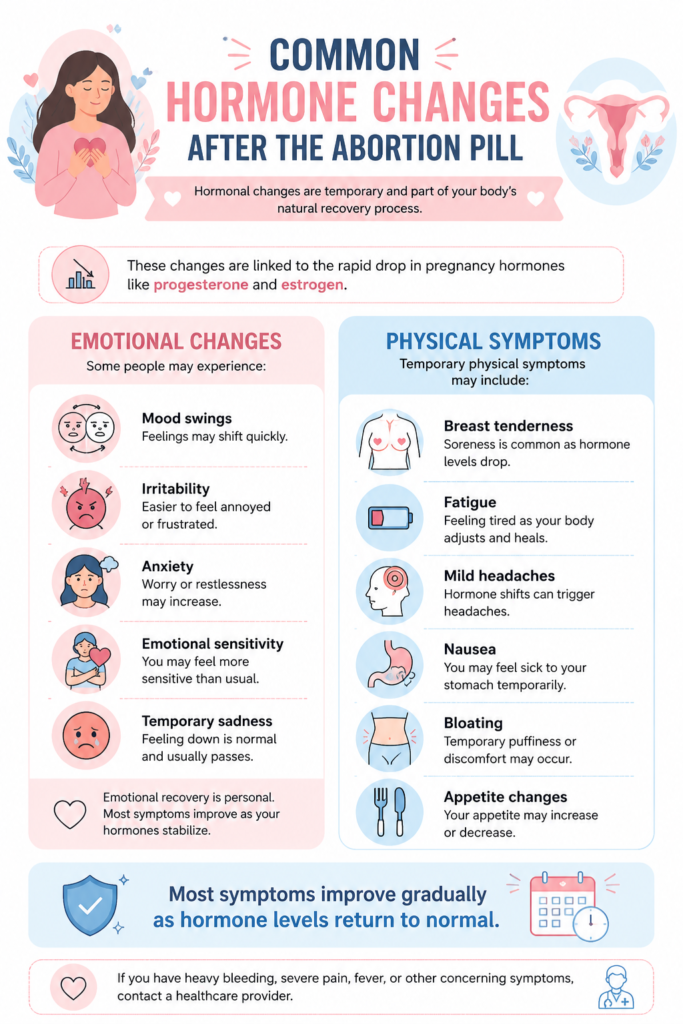
Because hormone levels change rapidly after the abortion pill, some physical and emotional symptoms are common during recovery.
These symptoms can vary from person to person depending on pregnancy stage, stress levels, overall health, and natural hormone sensitivity.
Emotional Changes After the Abortion Pill
Hormones influence mood, so emotional changes after a medication abortion are not unusual.
Some people experience:
- Mood swings
- Irritability
- Anxiety
- Emotional sensitivity
- Temporary sadness
These feelings are often linked to the rapid drop in pregnancy hormones, especially progesterone and estrogen.
It is also important to recognize that emotional recovery is personal. Some people feel relief immediately, while others may experience mixed emotions for a short period.
In most cases, emotional symptoms improve gradually as hormone levels stabilize.
Physical Symptoms Linked to Hormonal Changes
Several temporary physical symptoms are connected to hormonal changes after abortion pill treatment.
These may include:
- Breast tenderness
- Fatigue
- Mild headaches
- Nausea
- Bloating
- Temporary appetite changes
Breast soreness is particularly common because pregnancy hormones begin decreasing rapidly after the abortion.
Fatigue can also occur because the body is adjusting hormonally while simultaneously recovering physically from bleeding and cramping.
These symptoms are usually temporary and improve over time.
Why Bleeding and Cramping Happen
Bleeding and cramping are expected parts of the medication abortion process.
Mifepristone prepares the uterus by blocking progesterone, while misoprostol triggers uterine contractions to empty the pregnancy tissue.
Cramping can range from mild to intense, depending on the pregnancy stage and individual pain tolerance.
Bleeding is often heavier than a normal period initially and may continue lightly for one to two weeks afterward.
Many people worry that heavy bleeding means something is wrong, but moderate-to-heavy bleeding is a normal part of how abortion pills affect the body.
How Long Hormonal Changes Usually Last
Hormonal recovery happens gradually rather than instantly.
In the first several days after treatment, hormone levels begin dropping rapidly. Pregnancy symptoms like nausea and breast tenderness usually begin improving during this time.
Over the following weeks:
- hCG levels continue decreasing
- Ovulation may return
- Menstrual cycles begin resetting
- Emotional symptoms often improve
For many people, the first period after medication abortion arrives within 4–8 weeks.
However, the first cycle may feel slightly different than usual. Some people notice:
- Heavier bleeding
- Lighter bleeding
- More cramping
- Cycle irregularity
This does not necessarily mean hormones are damaged. It is often just part of the temporary adjustment process.
A helpful reminder is that recovery timelines vary. Some people feel hormonally normal again within days, while others need several weeks for their cycle to fully regulate.
Hormonal Changes After Abortion Pill: What Happens Week by Week
Understanding the recovery timeline can help reduce anxiety after taking abortion pills. Many symptoms people experience are linked to the body adjusting from pregnancy hormone levels back to its normal baseline.
First 24–48 Hours
The most intense part of the medication abortion process usually happens shortly after taking misoprostol.
During this time:
- Cramping becomes stronger
- Bleeding increases
- Progesterone activity drops sharply
- The uterus begins emptying
Some people also experience chills, nausea, diarrhea, or fatigue during this stage.
Emotionally, hormone fluctuations combined with stress and discomfort may temporarily increase mood swings or emotional sensitivity.
These reactions are generally short-term and expected.
The First Week After Taking Misoprostol
During the first week, hormone levels continue declining rapidly.
Pregnancy hormone hCG begins dropping, although it may still remain detectable for several weeks. This is why pregnancy tests can sometimes remain positive temporarily after a medication abortion.
Physical symptoms during the first week may include:
- Continued spotting or bleeding
- Mild cramping
- Breast tenderness
- Fatigue
For most people, symptoms gradually improve each day rather than disappearing immediately.
Weeks 2–6: Hormonal Recovery Phase
As the body continues healing, hormone levels begin stabilizing more noticeably during weeks two through six. This stage is often when people start feeling physically and emotionally more like themselves again.
The pregnancy hormone hCG continues leaving the body, while estrogen and progesterone gradually return to their normal cycle patterns.
During this recovery phase, many people notice:
- Less bleeding or spotting
- Improved energy levels
- Reduced breast tenderness
- Fewer mood fluctuations
- A return of normal appetite and sleep patterns
Ovulation can return surprisingly quickly after a medication abortion. In some cases, it may happen as early as two weeks afterward, even before the first period arrives. This means pregnancy is possible again shortly after treatment if contraception is not used.
The first menstrual cycle after abortion pills may be:
- Slightly heavier
- More crampy than usual
- Delayed by a few weeks
- Temporarily irregular
This adjustment period is considered normal for most people.
When Pregnancy Symptoms Usually Disappear
One of the clearest signs that hormones are returning to baseline is the gradual disappearance of pregnancy symptoms.
Symptoms that commonly improve over time include:
- Nausea
- Breast soreness
- Fatigue
- Food aversions
- Frequent urination
However, it is important to understand that hormone recovery is not instant. Some symptoms may linger for a short period while hCG fully declines.
People sometimes panic when they still feel “pregnant” a week or two after taking abortion pills, but mild lingering symptoms can be part of the normal hormonal adjustment process.
Does Abortion Pill Affect Hormones Long-Term or Future Fertility?
A major concern for many people is whether medication abortion can create permanent hormonal problems or affect future fertility.
Current medical research shows that medication abortion does not usually cause long-term hormonal imbalance or infertility.
Can Hormones Stay Imbalanced After a Medical Abortion?
Temporary hormonal changes are expected because pregnancy hormones shift quickly once the pregnancy ends. However, the body is naturally designed to regulate hormone levels again over time.
For most people:
- Hormonal balance gradually returns
- Menstrual cycles normalize
- Ovulation resumes naturally
- Long-term endocrine function remains unaffected
Persistent hormonal problems after abortion pills are uncommon.
If someone experiences ongoing symptoms like missing periods for several months, severe fatigue, or persistent pain, it is important to speak with a healthcare provider to rule out unrelated medical conditions.
How Quickly Fertility Can Return
One surprising fact for many people is how quickly fertility returns after medication abortion.
Ovulation may happen before the first menstrual period, meaning pregnancy can occur within just a few weeks after treatment.
This quick return to fertility is actually a sign that the reproductive system is functioning normally again.
For readers wondering about reproductive health concerns, you can also explore: Can the Abortion Pill Affect Fertility.
Understanding this timeline is important for anyone planning future pregnancy or considering birth control options after a medication abortion.
Understanding the Link Between Hormones and Fertility
Hormones regulate ovulation, menstruation, and reproductive function. Since medication abortion temporarily changes pregnancy hormones, some people assume it permanently disrupts fertility.
In reality, the opposite is usually true.
Once pregnancy hormones decline:
- The ovaries resume normal hormone production
- Ovulation restarts
- The menstrual cycle resets naturally
Because the uterus is not surgically altered during medication abortion, there is typically no long-term damage to reproductive organs or hormonal function.
When to Speak With a Healthcare Provider
Although most hormonal symptoms improve naturally, certain warning signs should not be ignored.
Seek medical advice if you experience:
- Heavy bleeding soaking multiple pads per hour
- Severe abdominal pain
- Fever lasting more than 24 hours
- Foul-smelling discharge
- Severe emotional distress that does not improve
- Missing periods for an extended time
Professional guidance can help determine whether symptoms are part of normal recovery or something requiring treatment.
How Abortion Pills Affect the Body Beyond Hormones
Hormonal changes are only one part of the recovery process. Medication abortion also affects the body physically as the uterus empties and heals.
Understanding these changes can help people feel more prepared and less anxious during recovery.
Temporary Changes in the Reproductive System
During a medication abortion, the uterus contracts to remove pregnancy tissue. This process is similar to a miscarriage and can temporarily affect the reproductive system.
Common physical effects include:
- Cramping
- Bleeding
- Uterine sensitivity
- Temporary cervical softening
These changes usually improve within days or weeks.
Most people recover fully without long-term reproductive complications.
Immune System and Energy Changes
After the abortion pill, some people feel physically drained for several days.
This can happen because:
- The body is losing blood
- Hormones are shifting rapidly
- The immune system is supporting healing
Fatigue is usually temporary and often improves with rest, hydration, and proper nutrition.
Sleep, Appetite, and Stress Responses
Hormones influence sleep and appetite, so temporary changes in these areas are common after medication abortion.
Some people experience:
- Difficulty sleeping
- Increased tiredness
- Reduced appetite
- Stress-related eating changes
Emotional stress can also intensify physical symptoms temporarily.
Rest and self-care play an important role in recovery during this stage.
Why Everyone’s Recovery Experience Differs
No two medication abortion experiences are exactly alike.
Several factors can influence recovery, including:
- Pregnancy duration
- Individual hormone levels
- Overall health
- Emotional stress
- Personal pain tolerance
Some people recover very quickly, while others need more time physically or emotionally.
This variation is normal and does not necessarily indicate a problem.
Misoprostol Side Effects Hormones May Influence
Although misoprostol does not directly block hormones like mifepristone, hormonal shifts can influence how certain side effects feel during recovery.
Cramping and Digestive Symptoms
Misoprostol works by causing uterine contractions, but it can also affect nearby muscles in the digestive system.
This may lead to:
- Diarrhea
- Nausea
- Vomiting
- Chills
- Stomach discomfort
These symptoms are usually temporary and improve within a day or two.
Mood Changes and Emotional Sensitivity
As pregnancy hormones decline rapidly, some people feel emotionally overwhelmed for a short period.
Mood-related symptoms can include:
- Crying spells
- Anxiety
- Irritability
- Feeling emotionally sensitive
These feelings often improve as hormones stabilize and the body recovers.
Support from trusted people, counseling resources, or medically accurate education can also help during this time.
Breast Tenderness and Hormonal Adjustment
Breast tenderness is one of the most common lingering symptoms after medication abortion.
This happens because breast tissue responds strongly to pregnancy hormones. Even after the pregnancy ends, it can take time for hormonal signals to fully decrease.
For most people, tenderness improves gradually within one to two weeks.
Tips for Supporting Hormonal Recovery After the Abortion Pill
Recovery after medication abortion is usually straightforward, but healthy habits can support both physical and hormonal healing.
Prioritize Rest and Hydration
The body needs time to recover from bleeding, cramping, and hormonal shifts.
Focus on:
- Drinking enough water
- Getting adequate sleep
- Avoiding unnecessary physical strain
- Using heating pads for cramps
Even simple rest can help reduce stress on the body during recovery.
Nutrition That Supports Recovery
Balanced nutrition can help support energy levels and recovery after bleeding.
Helpful foods may include:
- Iron-rich foods
- Protein sources
- Fruits and vegetables
- Electrolyte-rich fluids
Good nutrition can also support the body as hormone levels stabilize naturally.
Tracking Your Cycle After Medication Abortion
Many people feel more reassured when they track their cycle after abortion pills.
Tracking can help monitor:
- Bleeding patterns
- Ovulation signs
- Period timing
- Symptom improvement
Apps or calendars may help people understand when their cycle returns to normal.
Emotional Recovery Matters Too
Hormonal recovery is not just physical.
Stress, anxiety, and emotional exhaustion can affect how recovery feels overall. Giving yourself time to rest emotionally is just as important as physical healing.
Many people seek private resources and support online through trusted platforms like abortionpillsinprivate to better understand the recovery process and what symptoms are considered normal.
Conclusion
So, does abortion pill affect hormones? Yes — but the hormonal changes are temporary and medically expected.
Medication abortion works by blocking progesterone and ending pregnancy-related hormonal support. As the pregnancy ends, hormone levels naturally begin returning to their normal state.
During recovery, some people experience:
- Mood swings
- Fatigue
- Breast tenderness
- Bleeding changes
- Temporary cycle irregularities
For most people, these symptoms improve gradually within several weeks, and long-term hormonal imbalance is not expected.
Understanding how abortion pills affect the body can help reduce fear and misinformation. If symptoms ever feel severe or unusual, speaking with a healthcare professional is always the safest next step.
About the Author

Caroline
Caroline M. Hayes is a healthcare content specialist and writer with a focus on women’s health and patient education. With experience across telehealth and in-person care environments, she creates content that helps individuals better understand their health and make informed decisions with confidence.
Her work focuses on simplifying complex medical topics into clear, accessible, and easy-to-understand information—especially in areas that require sensitivity, privacy, and clarity. She contributes to educational resources designed to support individuals navigating important health choices.
Caroline’s approach combines accuracy, empathy, and clarity, ensuring that health information is both reliable and approachable for a wide audience.
Outside of her professional work, she enjoys yoga, reading, and caring for her growing collection of plants.
All content is created for informational purposes and reviewed to ensure clarity and accuracy