
Pregnancy loss and pregnancy termination are often discussed separately, but physically they can look remarkably similar. In fact, many people are surprised to learn that a medical abortion and a miscarriage can involve many of the same symptoms, including bleeding, cramping, and passing pregnancy tissue.
This similarity can lead to confusion, especially for individuals experiencing unexpected bleeding during pregnancy or researching what to expect after taking abortion medication. Understanding the distinction between these experiences can help you make informed decisions about your health, recovery, and medical care.
The most important difference is that a medical abortion is a planned process that uses medication to end a pregnancy, while a miscarriage occurs naturally when a pregnancy stops developing on its own. Although the reasons behind them differ, the physical process the body goes through is often very similar.
In this guide, we’ll explain the key differences between medical abortion and miscarriage, why their symptoms overlap, what treatment options may be used for both, and when it’s important to seek medical attention.
Quick Summary
Medical abortion and miscarriage can look physically very similar, but they are fundamentally different in cause. A medical abortion is an intentional process using medication to end a pregnancy, while a miscarriage is a natural, spontaneous loss of pregnancy. Despite this key difference, both often share similar symptoms like bleeding, cramping, and passing tissue because the body goes through a similar process of emptying the uterus. Understanding these differences helps patients recognize what they may be experiencing, when to seek medical care, and how recovery typically progresses in both situations.
Medical Abortion vs Miscarriage: The Key Difference Explained
When comparing medical abortion vs miscarriage, the biggest distinction is how the pregnancy ends.
What Is a Medical Abortion?
A medical abortion, also called a medication abortion, is a method of ending an early pregnancy using prescription medications. The process typically involves two medications:
- Mifepristone, which blocks progesterone and stops the pregnancy from continuing
- Misoprostol, which causes the uterus to contract and expel the pregnancy tissue
Most people complete a medication abortion at home, although follow-up care may be recommended depending on individual circumstances.
If you’re unfamiliar with the medications involved, our guide on What Are Abortion Pills explains how they work and what to expect throughout the process. You can also learn more in What Pills Are Used for Abortions, which covers the medications commonly prescribed for medication abortion.
What Is a Miscarriage?
A miscarriage, medically referred to as a spontaneous abortion, is the natural loss of a pregnancy before fetal viability, most often during the first trimester.
Miscarriages are common and frequently occur because the pregnancy is not developing normally. In many cases, chromosomal abnormalities prevent the embryo from growing properly. Other factors such as hormonal issues, certain medical conditions, or structural uterine abnormalities may also contribute.
Importantly, everyday activities like exercising, working, lifting normal household items, or experiencing stress do not typically cause miscarriage.
The Biggest Difference Between Medical Abortion and Miscarriage
While the physical symptoms can be nearly identical, the underlying cause is different.
A medical abortion is intentionally initiated through medication. A miscarriage occurs naturally without medication causing the pregnancy loss.
Another distinction is that a medical abortion is generally performed when the pregnancy is still developing, whereas many miscarriages occur because the pregnancy has already stopped developing before symptoms begin.
Medical Abortion Compared to Miscarriage: Why the Physical Symptoms Can Feel So Similar
One of the most common questions people ask is why medication abortion and miscarriage seem almost indistinguishable physically.
The answer lies in how the body responds.
In both situations, the uterus must expel pregnancy tissue. This process naturally causes contractions, bleeding, and tissue passage.
Whether the process begins because of medication or because the pregnancy has ended naturally, the body’s response is often very similar.
Common Symptoms Shared by Both
People experiencing either a medical abortion or a miscarriage may notice:
- Vaginal bleeding
- Moderate to heavy cramping
- Passing blood clots
- Passing pregnancy tissue
- Lower back discomfort
- Fatigue
- Temporary nausea
The intensity varies from person to person. Some experience symptoms similar to a heavy period, while others experience stronger cramping and heavier bleeding.
If you’re preparing for a medication abortion, our guide on Abortion Pill Symptoms provides a detailed overview of normal symptoms and recovery expectations.
Can Someone Tell the Difference Based on Symptoms Alone?
In many cases, no.
A person experiencing bleeding and cramping may not immediately know whether they are having a miscarriage or completing a medication abortion.
Even healthcare providers often rely on medical history, ultrasound findings, laboratory testing, and pregnancy hormone levels to determine exactly what is happening.
This is one reason medical evaluation can be important when symptoms are unexpected or severe.
How Long Do Symptoms Usually Last?
Both experiences can involve bleeding and cramping that continue for several days or even weeks.
After a medication abortion, the heaviest bleeding typically occurs shortly after taking misoprostol and gradually decreases over time.
After a miscarriage, symptom duration depends on how far the pregnancy had progressed and whether all pregnancy tissue passes naturally.
For a detailed timeline, see How Long Do Abortion Pills Take to Work, which explains what typically happens after taking abortion medications.
Difference Between Medical Abortion and Miscarriage: Side-by-Side Comparison
Although symptoms overlap significantly, there are still several important differences worth understanding.
The physical experience may be similar, but the circumstances leading to the experience are fundamentally different.
Understanding these distinctions can help reduce confusion and make conversations with healthcare providers more productive.
In the next section, we’ll explore why the same medications and medical procedures are sometimes used for both miscarriage management and medication abortion, along with what recovery typically looks like afterward.
Abortion Pill vs Natural Miscarriage: Are the Treatments Ever the Same?
One of the most surprising medical facts for many people is that the same medications used for a medical abortion are sometimes used to manage a miscarriage.
This overlap exists because both situations involve helping the uterus completely empty its contents. Whether a pregnancy has ended naturally or through medication, retained tissue can occasionally remain in the uterus and require additional treatment.
When Misoprostol Is Used for Miscarriage Management
If a miscarriage has occurred but the body has not fully passed the pregnancy tissue, a healthcare provider may recommend misoprostol.
Misoprostol helps stimulate uterine contractions, allowing the remaining tissue to pass naturally. This can help avoid surgical intervention and may shorten the recovery process.
Because misoprostol is used in both medication abortion and miscarriage care, the physical symptoms experienced afterward can be nearly identical.
Surgical Procedures Used in Both Situations
Sometimes medication alone is not enough, or a person may prefer a quicker treatment option.
In these cases, healthcare providers may recommend procedures such as:
- Vacuum aspiration
- Dilation and curettage (D&C)
These procedures remove pregnancy tissue from the uterus and may be used after either a miscarriage or a medical abortion if tissue remains.
The goal is the same in both situations: preventing complications such as infection, prolonged bleeding, or incomplete uterine evacuation.
How Doctors Confirm Completion
Whether someone has experienced a miscarriage or taken abortion medication, healthcare providers may recommend follow-up care to confirm that the pregnancy tissue has passed completely.
This may involve:
- An ultrasound examination
- Blood tests measuring pregnancy hormone levels (hCG)
- Assessment of symptoms and bleeding patterns
In many cases, decreasing pregnancy symptoms and reduced bleeding indicate that the process is progressing normally.
Why Follow-Up Care Matters
Most miscarriages and medication abortions resolve without complications. However, follow-up care can provide reassurance and help identify issues early if they arise.
Seeking medical guidance is especially important if symptoms seem unusual, persist longer than expected, or worsen over time.
Emotional Differences Between a Miscarriage and a Medical Abortion
While the physical symptoms of miscarriage and medication abortion may be similar, the emotional experience can be very different.
Every person’s circumstances, beliefs, support system, and pregnancy experience are unique. There is no universal emotional response.
Feelings Common After Miscarriage
Many people experience:
- Grief
- Sadness
- Shock
- Anger
- Confusion
- Anxiety about future pregnancies
For individuals who were planning to continue the pregnancy, miscarriage can feel like a significant loss that requires time to process emotionally.
Feelings Common After Medical Abortion
People who choose a medical abortion may experience:
- Relief
- Confidence in their decision
- Sadness
- Mixed emotions
- Temporary emotional stress
Some people feel only relief, while others experience a combination of emotions. Both responses are normal.
There Is No “Right” Way to Feel
One of the most important things to remember is that emotional reactions vary widely.
Some people need support from loved ones, counselors, or healthcare providers. Others process the experience privately.
Whether the pregnancy ended through miscarriage or medication abortion, emotional healing deserves the same level of care and attention as physical recovery.
Miscarriage After Abortion Pill: What People Often Ask
Many online searches involve terms such as “miscarriage after abortion pill” or “abortion vs miscarriage.” These questions often arise because the physical process can appear nearly identical.
Can an Abortion Pill Cause a Miscarriage?
In medical terminology, miscarriage is often referred to as a “spontaneous abortion.”
A medication abortion is different because the pregnancy is intentionally ended using medication.
However, the biological process of expelling pregnancy tissue can closely resemble a miscarriage, which is why the symptoms often overlap.
Is the Bleeding Different?
Not necessarily.
Some people experience heavier bleeding during a medication abortion, while others experience heavier bleeding during a miscarriage.
The amount of bleeding depends on several factors, including gestational age, individual physiology, and how much tissue must pass.
Can Healthcare Providers Tell the Difference?
Healthcare providers can often determine what happened based on:
- Medical history
- Pregnancy testing
- Ultrasound findings
- Medication use history
Physically, however, the uterus may appear very similar after a completed miscarriage or a completed medication abortion.
Does Either Affect Future Fertility?
For most people, neither a properly managed miscarriage nor a properly managed medication abortion affects future fertility.
Research consistently shows that medication abortion does not increase the risk of infertility.
If you’re concerned about future pregnancies, our guide on Can the Abortion Pill Affect Fertility explains the available evidence in greater detail. 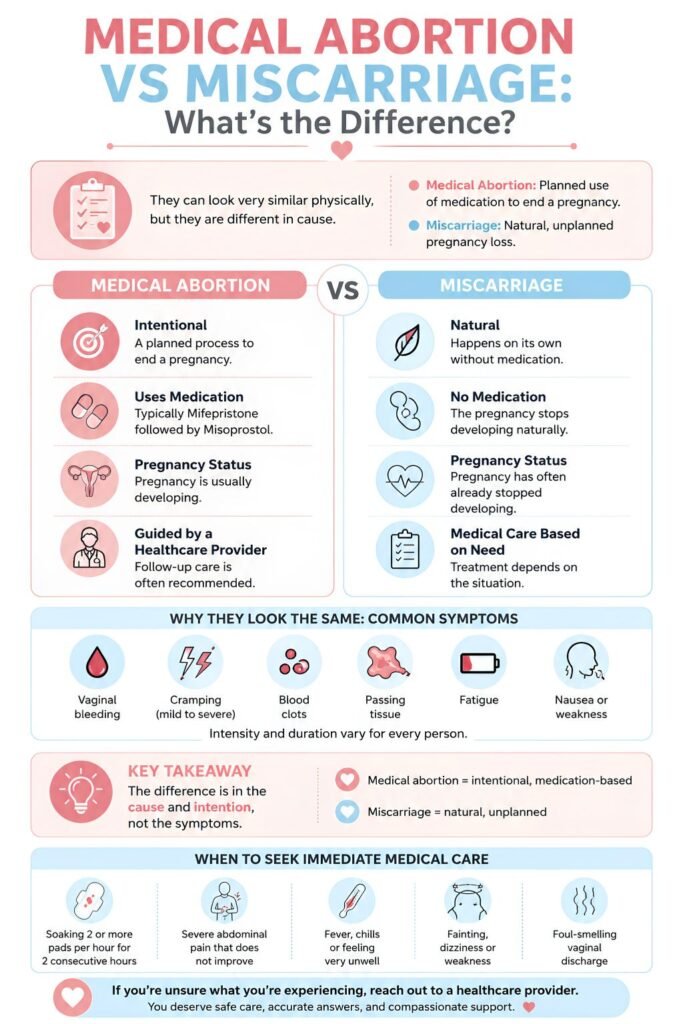
When to Seek Medical Attention After a Medical Abortion or Miscarriage
Most people recover without serious complications, but certain symptoms require prompt medical evaluation.
Symptoms That Need Immediate Medical Care
Contact a healthcare provider immediately if you experience:
- Soaking through two or more large pads per hour for two consecutive hours
- Severe abdominal pain that does not improve
- Persistent fever
- Fainting or severe dizziness
- Difficulty breathing
- Foul-smelling vaginal discharge
These symptoms may indicate excessive blood loss, infection, or another complication that requires treatment.
Symptoms That Are Usually Normal
The following are commonly expected during recovery:
- Moderate cramping
- Bleeding that gradually decreases
- Passing small clots
- Fatigue
- Temporary emotional ups and downs
If you are ever uncertain about a symptom, contacting a healthcare provider is always appropriate.
Practical Recovery Tips
Many people find recovery easier when they:
- Stay hydrated
- Get adequate rest
- Use approved pain relief medications when needed
- Monitor bleeding patterns
- Avoid strenuous activity if they feel physically exhausted
Listening to your body and allowing yourself time to recover can support both physical and emotional healing.
Understanding Your Options for Private, Safe Medication Abortion Care
Access to accurate information is an important part of making informed reproductive healthcare decisions.
For individuals considering medication abortion, understanding how the process works, what symptoms to expect, and where to access reliable support can help reduce uncertainty.
Exploring Telehealth Abortion Care
Telehealth has expanded access to medication abortion for many people across the United States.
Depending on state laws and eligibility requirements, telehealth services may allow patients to consult with licensed providers remotely and receive medications by mail.
If you’re comparing care options, our guide on Telehealth Abortion vs In Person explains the advantages and considerations of each approach.
Accessing Medication Abortion Safely
When researching abortion care, it is important to obtain medications and guidance from reputable sources that prioritize patient safety, privacy, and evidence-based information.
Individuals looking to Buy Abortion Pills Online should carefully evaluate available options, understand their state’s regulations, and seek trustworthy educational resources before making a decision.
Conclusion
Understanding the difference between medical abortion vs miscarriage starts with recognizing that while the physical symptoms are often similar, the reason the pregnancy ends is fundamentally different.
A medical abortion intentionally uses medication to end a pregnancy, whereas a miscarriage occurs naturally when a pregnancy stops developing on its own. Despite these differences, both experiences may involve similar bleeding, cramping, recovery timelines, and even some of the same medical treatments.
Knowing what symptoms are normal, when to seek medical care, and where to find reliable information can help you navigate either experience with greater confidence. If you have questions about pregnancy loss, medication abortion, or recovery, speaking with a qualified healthcare professional can provide personalized guidance and reassurance.
About the Author

Caroline
Caroline M. Hayes is a healthcare content specialist and writer with a focus on women’s health and patient education. With experience across telehealth and in-person care environments, she creates content that helps individuals better understand their health and make informed decisions with confidence.
Her work focuses on simplifying complex medical topics into clear, accessible, and easy-to-understand information—especially in areas that require sensitivity, privacy, and clarity. She contributes to educational resources designed to support individuals navigating important health choices.
Caroline’s approach combines accuracy, empathy, and clarity, ensuring that health information is both reliable and approachable for a wide audience.
Outside of her professional work, she enjoys yoga, reading, and caring for her growing collection of plants.
All content is created for informational purposes and reviewed to ensure clarity and accuracy