
Introduction: Understanding the Medications Used in Abortion Care
When people search for what pills are used for abortions, they are often looking for clear, private, and easy-to-understand information during a stressful or uncertain moment.
The most commonly used medications in abortion care are mifepristone and misoprostol. Together, they are used in what is called a medication abortion — a non-surgical method used to end an early pregnancy.
This process involves two steps: the first medication stops the pregnancy from continuing, and the second medication helps the uterus empty naturally through cramping and bleeding.
It is also important to understand that abortion pills are different from emergency contraception such as Plan B, which works to prevent pregnancy before it begins. Medication abortion is used after a pregnancy has already started.
Many people also want to understand what the experience feels like, what symptoms are normal, and whether the process is safe. This guide explains everything in a clear, supportive, and medically accurate way.
Quick Answer: What Pills Are Used for Abortions?
The most commonly used pills for abortions are:
- Mifepristone
- Misoprostol
These two medications are usually used together as part of a medication abortion process.
The Two Main Pills Used for Abortion
Mifepristone is taken first. It works by blocking progesterone, a hormone that is necessary for pregnancy to continue developing.
Once progesterone is blocked, the lining of the uterus begins to break down and the pregnancy can no longer progress.
Misoprostol is taken after that. It causes the uterus to contract, which leads to cramping and bleeding as the pregnancy tissue is expelled from the body.
In some cases where mifepristone is not available, misoprostol alone may be used, though the combination method is more common and predictable.
You can learn more about how these medications work in detail in this guide on What Are Abortion Pills and How Do They Work?
How Mifepristone and Misoprostol Work Together
Medication abortion works because each medication plays a specific role in the process.
How Mifepristone Works in the Body
Mifepristone is the first step in the process. It blocks progesterone, which is a hormone that helps support pregnancy.
Without progesterone, the uterine lining begins to break down, and the pregnancy stops developing.
At this stage, many people do not feel major physical changes yet. The body is simply responding internally in preparation for the next medication.
How Misoprostol Causes Cramping and Bleeding
Misoprostol is taken after mifepristone. It causes the uterus to contract, which leads to cramping and bleeding.
This is the stage where the pregnancy tissue is passed from the body.
Many people describe this part of the process as similar to:
- A heavy menstrual period
- Strong menstrual cramps
- A miscarriage-like experience
Cramping can feel intense for a short period of time, but it is a normal and expected part of the process.
How the Pills Are Usually Taken
Medication abortion is typically taken in two steps:
- Mifepristone is taken first
- Misoprostol is taken later, after a waiting period guided by a healthcare provider
Misoprostol may be taken in different ways:
- Between the cheek and gums (buccal)
- Under the tongue (sublingual)
- Or other medically directed methods
The purpose of both medications is the same: to safely complete the process of ending an early pregnancy.
How Long It Takes to Work
The timeline can vary slightly from person to person, but generally:
- Symptoms often begin within a few hours after taking misoprostol
- The strongest cramping and bleeding usually happen during the first several hours
- Most intense symptoms improve within about 24 hours
- Light bleeding or spotting may continue for several days
To understand the full timeline step-by-step, you can read more about the abortion pill timeline.
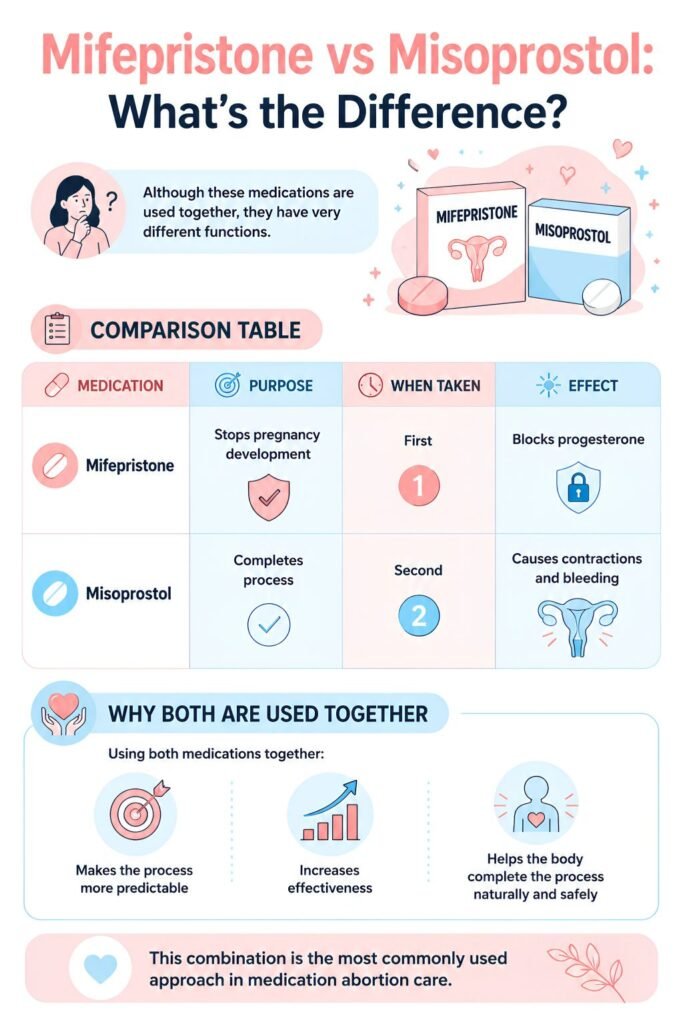
Mifepristone vs Misoprostol: What’s the Difference?
Although these medications are used together, they have very different functions.
Comparison Table
Why Both Are Used Together
Using both medications together:
- Makes the process more predictable
- Increases effectiveness
- Helps the body complete the process naturally and safely
This combination is the most commonly used approach in medication abortion care.
What to Expect After Taking Abortion Medication
Understanding what happens afterward can help reduce fear and uncertainty.
Common Physical Symptoms
After taking misoprostol, common symptoms include:
- Heavy bleeding
- Cramping
- Blood clots
- Nausea
- Fatigue
- Chills or mild fever
- Diarrhea
These symptoms are expected and usually temporary.
You can learn more about this in detail in what are the side effects of abortion pills.
What Bleeding and Cramping May Feel Like
Bleeding is often heavier than a normal period, especially in the first several hours.
Cramping may feel stronger than typical menstrual cramps, but the intensity usually comes in waves and improves over time.
Every person’s experience is different. Some may have stronger symptoms, while others may have a milder experience.
What Is Normal During the Process?
It is normal to experience:
- Passing blood clots
- Waves of cramping
- Heavy bleeding that gradually becomes lighter
- Fatigue afterward
These symptoms show that the body is responding to the medication.
Comfort Measures During Recovery
Many people find relief with simple supportive steps such as:
- Using a heating pad
- Drinking water and staying hydrated
- Resting in a comfortable space
- Using pads instead of tampons
- Wearing loose clothing
These measures can make the process more manageable physically.
What Pills Are Used for Abortions When Mifepristone Is Not Available?
In some situations, mifepristone may not be available due to access, cost, or regional restrictions. In these cases, misoprostol alone may be used as an alternative method under medical guidance.
Understanding Misoprostol-Only Use
Misoprostol works by causing the uterus to contract and empty. This leads to cramping and bleeding, similar to a natural miscarriage.
This method is sometimes used when the standard combination of medications is not accessible.
Is Misoprostol Alone Effective?
Misoprostol-only abortion is effective, but the experience can be more variable compared to using both medications together.
Some differences may include:
- Longer duration of symptoms
- More variable bleeding patterns
- Possible need for additional doses
Even with these differences, misoprostol is still widely recognized as a safe and effective option when used appropriately.
Key Differences Between Methods
- Combination method (mifepristone + misoprostol): more predictable timing and outcome
- Misoprostol-only method: more variable experience but still effective
- Both methods rely on uterine contractions to complete the process
Who Can Use Medication Abortion Pills?
Medication abortion is typically used in early pregnancy, but suitability depends on individual health and timing.
Early Pregnancy Timing Considerations
Medication abortion is generally used in early pregnancy. Earlier use often leads to a more predictable process and symptom pattern.
A healthcare provider usually helps confirm pregnancy timing before prescribing medication.
Why Medical Guidance Matters
Medical guidance is important because it helps ensure:
- Correct timing of medication use
- Safety based on personal health history
- Identification of any risks that may require different care
Situations That May Need Extra Evaluation
Some situations may require additional medical attention before using abortion medication, including:
- Possible ectopic pregnancy
- Certain chronic health conditions
- Severe anemia or bleeding disorders
These evaluations help ensure the safest possible care approach.
Are Abortion Pills Safe and Effective?
Medication abortion has been widely studied and is considered a safe and effective method for ending an early pregnancy when used appropriately.
Effectiveness Overview
When mifepristone and misoprostol are used together, the process is highly effective for most people in early pregnancy.
Effectiveness is generally higher when the medication is used earlier in pregnancy.
Common Side Effects
Common side effects may include:
- Cramping
- Heavy bleeding
- Nausea or vomiting
- Chills or mild fever
- Fatigue
- Diarrhea
These symptoms are expected and usually temporary as the body completes the process.
Can Abortion Pills Affect Hormones?
Hormone levels naturally shift during and after medication abortion. These changes are temporary, and the body typically returns to its normal hormonal cycle afterward.
You can read more here: Does abortion pill affect hormones
Can the Abortion Pill Affect Fertility?
There is no evidence that medication abortion affects future fertility.
Ovulation can return quickly after the process, meaning pregnancy is possible again if no contraception is used.
Learn more: Can the Abortion Pill Affect Fertility
When to Seek Medical Care
It is important to seek medical support if any of the following occur:
- Soaking multiple pads per hour for several hours
- Severe or worsening abdominal pain
- Fever that does not go away
- Foul-smelling discharge
- No bleeding after taking misoprostol
These signs may indicate a complication that needs evaluation.
How People Access Abortion Medication in the United States
Access to abortion medication in the U.S. varies depending on state laws and healthcare availability. Many people obtain care through clinics or telehealth services.
Telehealth Medication Abortion
In many states, people can consult with licensed healthcare providers through telehealth. After evaluation, medication may be prescribed and provided through mail or pharmacy services depending on regulations.
This option is often chosen for privacy and convenience.
Can Abortion Pills Be Mailed?
In some regions, medication abortion pills can be delivered by mail after a telehealth consultation. Availability depends on local laws and healthcare policies.
Why People Choose At-Home Medication Abortion
Many people prefer at-home medication abortion because it offers:
- Privacy in a familiar environment
- Greater comfort during the process
- Flexible timing for taking medication
- Early pregnancy management without clinic visits
How Much Does the Abortion Pill Cost?
The cost of abortion medication varies depending on:
- Provider type
- Insurance coverage
- State regulations
- Telehealth vs in-person care
You can explore pricing details here: How Much Does the Abortion Pill Cost
Supportive Care During Medication Abortion
Supportive care can make the process more comfortable and manageable.
Pain Relief Options
Common comfort measures include:
- Ibuprofen for cramping
- Heating pads applied to the abdomen
- Rest and hydration
Anti-Nausea Support
Some people may experience nausea or digestive discomfort. Providers may recommend supportive medications or simple dietary adjustments to help manage symptoms.
Follow-Up Care
Follow-up care may include:
- Confirming the process is complete
- Monitoring symptoms over time
- Pregnancy testing if recommended
- Checking in with a healthcare provider if needed
Conclusion: Understanding What Pills Are Used for Abortions
The most commonly used medications for abortion are mifepristone and misoprostol, which work together to safely end an early pregnancy.
While experiences vary from person to person, most people go through a predictable process that includes cramping, bleeding, and gradual recovery over time.
Having clear and accurate information can help reduce uncertainty and support informed decision-making. Access and experiences may differ depending on location, but understanding how these medications work is an important part of reproductive health knowledge.
About the Author

Caroline
Caroline M. Hayes is a healthcare content specialist and writer with a focus on women’s health and patient education. With experience across telehealth and in-person care environments, she creates content that helps individuals better understand their health and make informed decisions with confidence.
Her work focuses on simplifying complex medical topics into clear, accessible, and easy-to-understand information—especially in areas that require sensitivity, privacy, and clarity. She contributes to educational resources designed to support individuals navigating important health choices.
Caroline’s approach combines accuracy, empathy, and clarity, ensuring that health information is both reliable and approachable for a wide audience.
Outside of her professional work, she enjoys yoga, reading, and caring for her growing collection of plants.
All content is created for informational purposes and reviewed to ensure clarity and accuracy