
Recovering after a medication abortion is about more than waiting for the bleeding to stop. It’s a process that involves caring for your body, paying attention to your emotional well-being, and knowing what symptoms are expected as your body heals. While every person’s experience is different, most people recover without complications when they follow their aftercare instructions and understand what to expect.
If you’re looking for guidance on self-care after medication abortion, it’s completely normal to have questions. You may be wondering how much bleeding is normal, when you’ll start feeling like yourself again, what foods to eat, or when it’s safe to return to work, exercise, or sex. These concerns are common, and having reliable information can make recovery feel much less overwhelming.
The good news is that medication abortion has a well-established safety profile when used as directed. Recovery often begins immediately after the pregnancy tissue passes, but healing continues over the following days and weeks. During this time, simple habits like resting, staying hydrated, eating nourishing foods, and recognizing normal recovery signs can help support your body.
This guide explains what medication abortion recovery typically looks like, offers practical self-care strategies, discusses emotional healing, and outlines the warning signs that require medical attention. Whether you’re preparing for your recovery or you’re already experiencing it, these recommendations can help you feel more confident throughout the healing process.
Self-Care After Medication Abortion Starts With Knowing What to Expect
Understanding what your body is doing during recovery can reduce anxiety and help you recognize what’s normal. Every recovery is unique, but there are common physical changes that most people experience after taking abortion pills.
The First 24 to 48 Hours
The most intense symptoms usually happen within the first day after taking misoprostol. During this time, your uterus contracts to empty its contents, leading to bleeding and cramping that may feel stronger than a typical menstrual period.
You may experience:
- Heavy bleeding
- Passing blood clots
- Moderate to strong cramping
- Fatigue
- Temporary chills
- Mild nausea or diarrhea
- Feeling emotionally drained
These symptoms are expected for many people and usually begin to improve after the pregnancy tissue has passed.
What Recovery Looks Like During the Next Few Weeks
As the first few days pass, most symptoms gradually become milder.
It’s common to notice:
- Bleeding becoming lighter each day
- Spotting that continues for several weeks
- Occasional mild cramping
- Pregnancy symptoms fading
- Energy levels slowly improving
Some days may feel better than others, and that’s perfectly normal. Recovery doesn’t always happen in a straight line.
Every Recovery Is Different
Several factors influence how quickly you recover, including:
- How far along the pregnancy was
- Your overall health
- Your body’s response to the medications
- Previous pregnancies or childbirth
Avoid comparing your recovery to someone else’s. What matters most is that your symptoms gradually improve over time and that you know when something falls outside the expected range.
Once you understand what’s happening physically, you can focus on supporting your body’s natural healing process.
Self-Care After Medication Abortion: 10 Practical Recovery Tips
Taking care of yourself after a medication abortion doesn’t require anything complicated. Small, thoughtful habits can improve your comfort and support your recovery.
1. Give Yourself Permission to Rest
Your body has gone through significant hormonal and physical changes. Even if you begin feeling better after the first day, fatigue may linger for several days.
If possible:
- Take one or two days away from work or school.
- Avoid heavy lifting.
- Skip strenuous workouts.
- Listen to your body’s signals rather than pushing through exhaustion.
Rest allows your uterus to recover while giving your body the energy it needs to heal.
2. Stay Well Hydrated
Bleeding and cramping can leave you feeling tired and dehydrated.
Aim to drink water regularly throughout the day. You may also find comfort in:
- Herbal tea
- Clear soups
- Electrolyte drinks if you’ve experienced heavy bleeding
- Fresh fruit with high water content
Proper hydration supports circulation, helps replace lost fluids, and may even reduce headaches and fatigue.
3. Eat Nutritious Meals That Support Recovery
Eating balanced meals is one of the simplest ways to support medication abortion recovery.
If you’ve experienced moderate or heavy bleeding, your body benefits from foods rich in iron and protein.
Some excellent choices include:
- Spinach and kale
- Lentils and beans
- Lean beef or chicken
- Eggs
- Tofu
- Oatmeal
- Sweet potatoes
- Citrus fruits rich in vitamin C
Many people also appreciate warm comfort food during recovery. A bowl of soup, oatmeal, or homemade stew can be soothing while providing valuable nutrients.
Try to avoid skipping meals, even if your appetite feels reduced during the first day.
4. Ease Cramping With Gentle Heat
Cramping is one of the most common parts of physical recovery after medication abortion.
A heating pad placed on your lower abdomen or lower back can provide significant relief.
Other helpful strategies include:
- Gentle stretching once cramping improves
- Warm showers
- Light walking around your home if you feel comfortable
These approaches may help relax the uterine muscles without requiring additional medication.
5. Use Pain Medication as Directed
Ibuprofen is commonly recommended for medication abortion cramps because it reduces inflammation while relieving pain.
Always:
- Follow your healthcare provider’s instructions.
- Avoid taking more than the recommended dose.
- Ask your provider before using medications if you have stomach ulcers, kidney disease, or medication allergies.
If your pain becomes severe or continues despite recommended medication, it’s important to contact a healthcare professional.
6. Use Sanitary Pads Instead of Tampons
Healthcare providers often recommend using sanitary pads during the initial recovery period.
Pads offer two important advantages:
- They allow you to monitor how much you’re bleeding.
- They may reduce the chance of introducing bacteria into the vagina while your cervix is still closing.
Bleeding may be heavier than a normal period at first before gradually becoming lighter.
Monitoring your bleeding is one of the easiest ways to recognize normal recovery signs and identify when medical evaluation may be needed.
7. Avoid Activities That May Increase Infection Risk
During the first one to two weeks, your uterus and cervix are still healing.
Many healthcare providers recommend temporarily avoiding:
- Tampons
- Sexual intercourse
- Douching
- Swimming pools
- Hot tubs
- Long baths
Showering is generally considered safe and can help you feel refreshed during recovery.
These temporary precautions are part of good abortion aftercare and help lower the risk of infection.
8. Return to Exercise Gradually
While light walking is often comfortable once your bleeding slows, strenuous workouts can wait until you feel physically ready.
Pay attention to how your body responds. If exercise increases bleeding or causes stronger cramps, give yourself a little more time before resuming your usual routine.
Most people can gradually return to regular activity within a week or two, depending on how they’re feeling.
9. Prioritize Quality Sleep
Sleep plays an important role in medication abortion healing. During rest, your body repairs tissues, balances hormone levels, and restores energy. Although you may be eager to return to your normal routine, allowing yourself extra sleep during the first few days can make recovery feel easier.
If you’re having trouble sleeping because of cramping or emotional stress, consider these simple habits:
- Keep your bedroom cool and comfortable.
- Limit screen time before bed.
- Drink a warm caffeine-free beverage in the evening.
- Use a heating pad before sleeping if cramping is keeping you awake.
Don’t worry if you need more sleep than usual. Temporary fatigue is a normal part of recovery.
10. Follow Your Aftercare Instructions Carefully
Every medication abortion is unique, so it’s important to follow the guidance provided by your healthcare provider or clinic.
This may include:
- Taking all prescribed medications as directed.
- Completing any recommended follow-up testing.
- Watching for changes in bleeding or pain.
- Contacting your provider if symptoms don’t improve.
If you purchased your abortion pills through a trusted online abortion pill provider, make sure you understand how to access aftercare support if questions arise during recovery.
Simple, consistent self-care and following instructions can make the healing process smoother and help you feel more confident every step of the way.
Medication Abortion Recovery Timeline: What Happens Week by Week
Knowing what recovery typically looks like can help reassure you that your body is healing as expected.
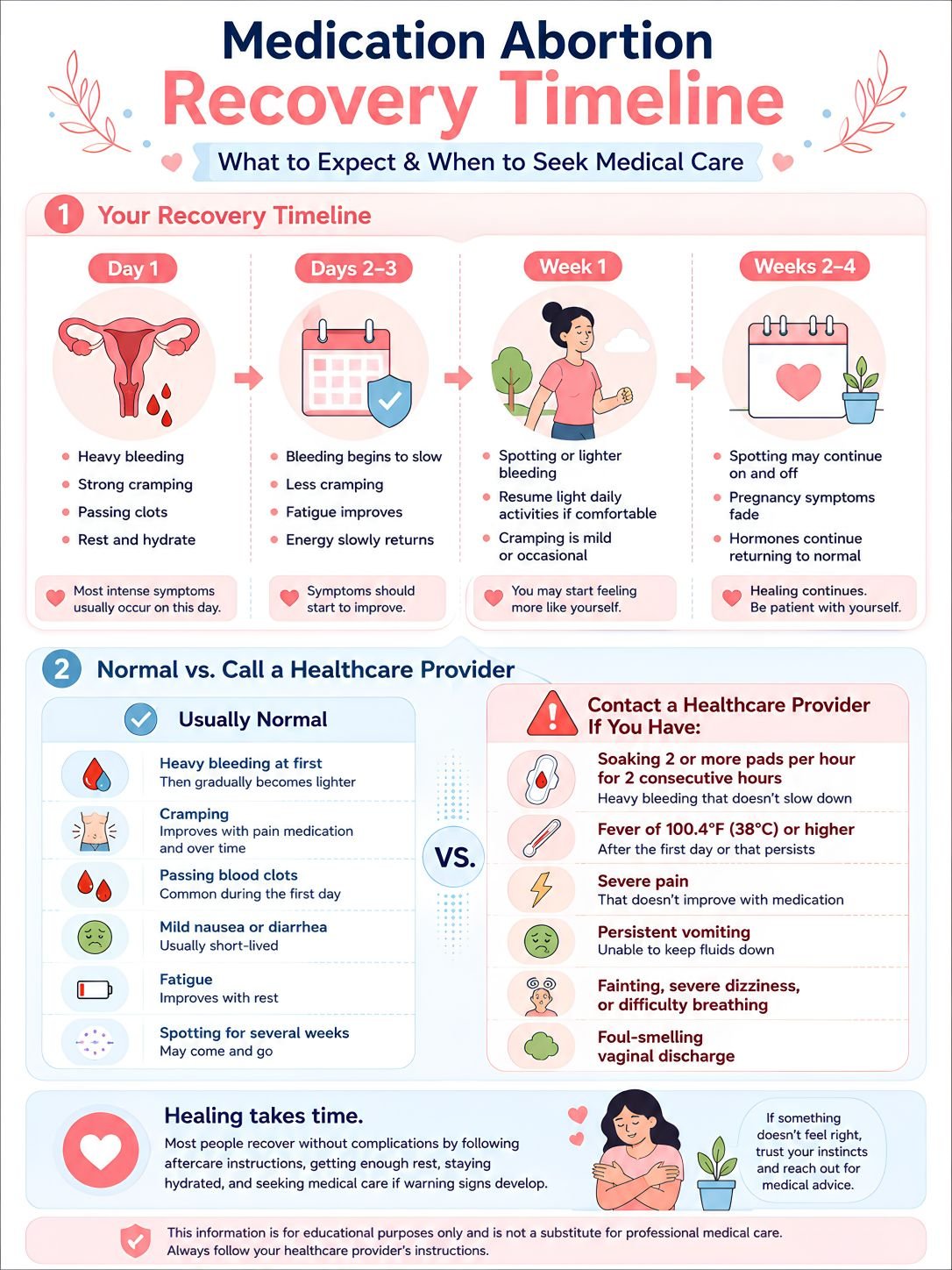
Day 1
The heaviest bleeding and strongest cramping usually occur after taking misoprostol. Passing clots and pregnancy tissue is expected during this stage. Rest, hydration, and pain management are especially important.
Days 2–3
Bleeding often becomes lighter, although some people continue to experience moderate bleeding. Cramping usually decreases, and many people begin to regain some energy.
Week 1
Most people notice continued improvement. Spotting may continue, but heavy bleeding generally slows significantly. You may feel ready to return to work, school, or light exercise if your symptoms allow.
Weeks 2–4
Spotting may continue on and off, which is often normal. Pregnancy symptoms such as nausea or breast tenderness typically disappear, and hormone levels continue returning to their pre-pregnancy state.
Remember that healing isn’t identical for everyone. As long as your symptoms gradually improve and you aren’t experiencing warning signs, your recovery is likely progressing normally.
Self-Care After Medication Abortion Includes Emotional Recovery Too
Physical healing is only one part of recovery. Emotional recovery after abortion is different for every person, and there is no “correct” way to feel.
Some people experience relief immediately. Others may feel sadness, grief, uncertainty, or a combination of emotions. Some feel very little emotionally at all. Every response can be normal.
Give Yourself Permission to Feel
Avoid judging your emotions or comparing your experience with others. Recovery isn’t measured by how you feel emotionally.
Gentle Ways to Support Emotional Healing
Small acts of self-care can make a meaningful difference, such as:
- Taking short walks outdoors
- Writing in a journal
- Listening to calming music
- Reading a favorite book
- Watching comforting movies or shows
- Practicing deep breathing or mindfulness
- Spending time with supportive friends or family
Sometimes, simply allowing yourself a quiet day without obligations is one of the best forms of self-care.
When to Seek Emotional Support
If sadness, anxiety, or distress becomes overwhelming, lasts for several weeks, or begins interfering with daily life, consider reaching out to a healthcare provider or licensed mental health professional.
Seeking support is a sign of taking care of yourself—not a sign that something is wrong.
Medication Abortion Recovery: What’s Normal and What’s Not
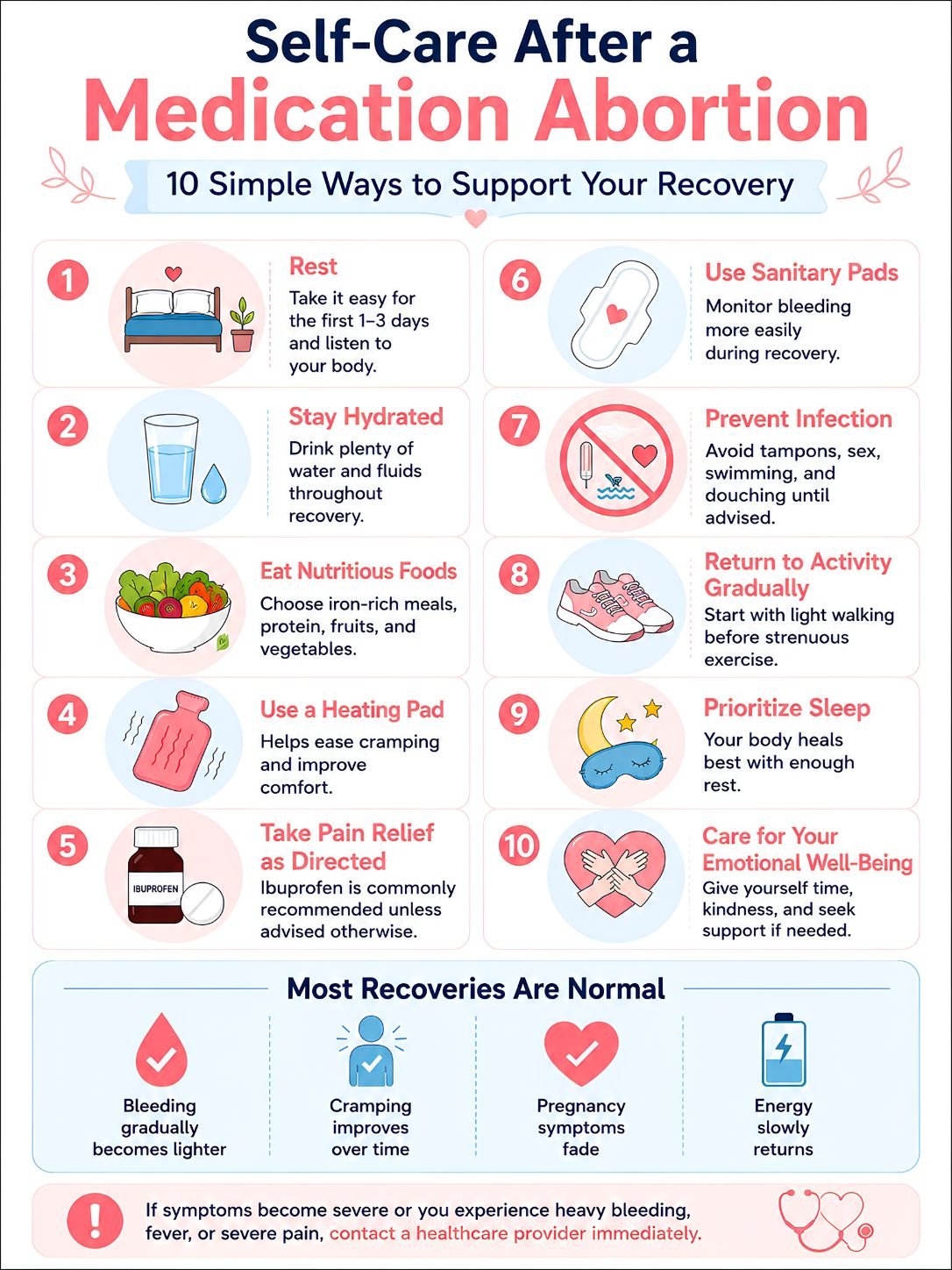
Many recovery symptoms can seem alarming if you aren’t expecting them. Knowing the difference between common recovery experiences and warning signs can help you feel more confident.
These recovery signs can help you understand when healing is progressing normally and when it’s time to seek medical advice.
When to Contact a Healthcare Provider After Recovery Begins
Although complications are uncommon, it’s important to recognize symptoms that shouldn’t be ignored.
Contact a healthcare provider promptly if you experience:
- Heavy bleeding that soaks through two or more large pads per hour for two consecutive hours.
- Severe abdominal pain that doesn’t improve after taking recommended pain medication.
- A fever of 100.4°F (38°C) or higher that continues after the first day or develops later during recovery.
- Foul-smelling vaginal discharge.
- Persistent dizziness, fainting, or difficulty breathing.
- Very little or no bleeding after taking misoprostol when bleeding was expected.
Trust your instincts. If something doesn’t feel right, it’s always appropriate to seek medical advice. Early evaluation can provide reassurance or identify a problem before it becomes more serious.
Abortion Aftercare Follow-Up: Why It Still Matters
Even when you’re feeling better, follow-up care remains an important part of post-medication abortion care.
Your healthcare provider may recommend confirming that the abortion is complete through:
- A home pregnancy test several weeks later.
- An ultrasound.
- Blood tests, depending on your individual situation.
Follow-up also gives you an opportunity to discuss any lingering symptoms or questions.
Returning to Daily Activities
Most people can gradually return to normal routines as they feel comfortable.
This includes:
- Going back to work or school.
- Resuming exercise.
- Having sex when your healthcare provider says it’s appropriate.
- Using tampons if advised it’s safe.
Everyone heals at a different pace, so let your body—not the calendar—guide your recovery.
Fertility Can Return Quickly
Ovulation may occur as soon as a few weeks after a medication abortion. If you don’t want to become pregnant again right away, talk with your healthcare provider about contraception options that fit your needs.
Looking for Trusted Support Throughout Your Recovery?
Having access to clear information and ongoing support can make the recovery process feel less stressful.
If you’re considering medication abortion or want guidance before, during, and after treatment, choosing a trusted online abortion pill provider is an important first step.
Abortion Pills in Private offers discreet abortion pill services for eligible individuals in the United States, along with step-by-step instructions, recovery guidance, and responsive customer support to help you feel informed throughout the process. Having reliable resources available before and after treatment can provide added confidence during your recovery journey.
Key Takeaways
- Self-care after medication abortion begins with understanding what symptoms are normal, including bleeding, cramping, fatigue, and temporary hormonal changes.
- Resting for the first few days, staying hydrated, and eating iron-rich, nutritious foods can support a smoother recovery.
- A heating pad and ibuprofen (when recommended by your healthcare provider) can help relieve cramping during medication abortion recovery.
- Use sanitary pads instead of tampons initially to monitor bleeding and help reduce the risk of infection.
- Avoid inserting anything into the vagina, including tampons and having sex, until your healthcare provider says it’s safe.
- Emotional recovery is different for everyone. Feelings such as relief, sadness, or a mix of emotions are all valid and normal.
- Know the warning signs that require medical attention, including heavy bleeding, persistent severe pain, fever, foul-smelling discharge, or fainting.
- Follow any recommended follow-up instructions to confirm the abortion is complete and discuss future contraception if needed.
- Most people recover without complications when they follow proper abortion aftercare guidance and seek medical help if concerns arise.
- Choosing a trusted online abortion pill provider that offers clear instructions and ongoing support can help make the experience more informed and less stressful.
Conclusion
Practicing self-care after medication abortion means giving your body and mind the time and support they need to heal. Rest when you’re tired, stay hydrated, eat nourishing meals, manage cramping with recommended pain relief, and pay attention to how your symptoms change over time.
Remember that most people recover without complications, and gradual improvement is a reassuring sign that healing is underway. At the same time, knowing the warning signs that require medical attention helps ensure you receive care promptly if needed.
Recovery is a personal journey, and there’s no need to rush it. Be patient with yourself, follow your aftercare instructions, and don’t hesitate to reach out to a healthcare provider if you have questions or concerns. With the right information, practical support, and compassionate self-care, you can move through recovery with greater confidence and peace of mind.
About the Author

Caroline*
Caroline M. Hayes is a healthcare content specialist and writer with a focus on women’s health and patient education. With experience across telehealth and in-person care environments, she creates content that helps individuals better understand their health and make informed decisions with confidence.
Her work focuses on simplifying complex medical topics into clear, accessible, and easy-to-understand information—especially in areas that require sensitivity, privacy, and clarity. She contributes to educational resources designed to support individuals navigating important health choices.
Caroline’s approach combines accuracy, empathy, and clarity, ensuring that health information is both reliable and approachable for a wide audience.
Outside of her professional work, she enjoys yoga, reading, and caring for her growing collection of plants.
All content is created for informational purposes and reviewed to ensure clarity and accuracy
*Name has been changed to protect privacy.*