
Medication abortion is one of the most common non-surgical ways to end an early pregnancy in the United States. It typically involves two medications — Mifepristone and Misoprostol — that work together to safely empty the uterus. While the process is medically well-established, many people still feel nervous about what happens after taking the pills.
Questions like:
- “How painful is it?”
- “How much bleeding is normal?”
- “Are chills and nausea expected?”
- “How do I know if something is wrong?”
are extremely common.
The reality is that most side effects of abortion pills are expected and temporary. Cramping, bleeding, nausea, diarrhea, chills, and fatigue are all common parts of the process. For many people, the experience feels similar to a heavy period or an early miscarriage.
At the same time, understanding which symptoms are normal — and which may require medical attention — can make the experience feel far less stressful.
This guide explains:
- The most common abortion pill side effects
- How long symptoms usually last
- What bleeding and cramping are considered normal
- Warning signs to watch for
- Recovery tips that can help you feel more comfortable
Quick Answer: What Are the Side Effects of Abortion Pills?
The most common medical abortion side effects include:
- Heavy bleeding with blood clots
- Strong cramping
- Nausea or vomiting
- Diarrhea
- Chills or mild fever
- Fatigue and dizziness
These symptoms usually begin within a few hours after taking Misoprostol, the second medication in the abortion pill regimen. The heaviest symptoms are often temporary and improve within 24–48 hours.
However, symptoms like extremely heavy bleeding, severe pain that does not improve, persistent fever, or foul-smelling discharge may require medical attention.
Common Side Effects of Abortion Pills and Why They Happen
Most people experience at least some symptoms during a medication abortion. In fact, many of these effects are signs that the medication is working properly.
The abortion pill process typically includes:
- Mifepristone — blocks progesterone, which stops the pregnancy from continuing
- Misoprostol — causes the uterus to contract and expel pregnancy tissue
Because Misoprostol triggers uterine contractions, it is responsible for most noticeable abortion pill symptoms.
Symptoms can vary from person to person. Some individuals experience intense cramping and heavy bleeding, while others have milder symptoms. Both experiences can still fall within the normal range.
Cramping After Abortion Pill: Why It Can Feel So Intense
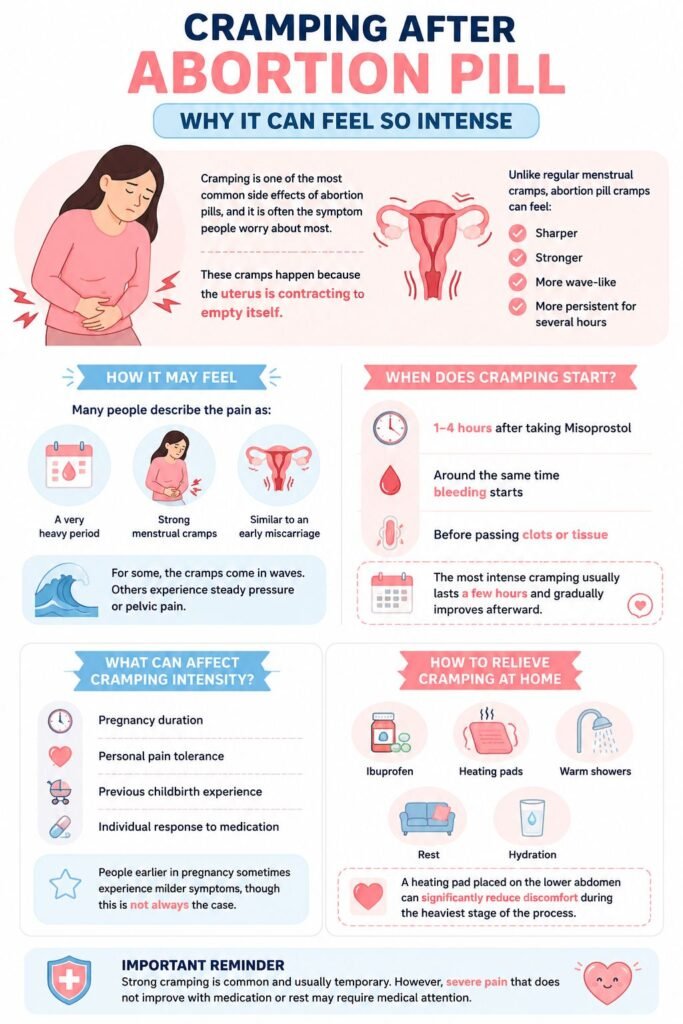
Cramping is one of the most common side effects of abortion pills, and it is often the symptom people worry about most.
These cramps happen because the uterus is contracting to empty itself. Unlike regular menstrual cramps, abortion pill cramps can feel:
- Sharper
- Stronger
- More wave-like
- More persistent for several hours
Many people describe the pain as:
- A very heavy period
- Strong menstrual cramps
- Similar to an early miscarriage
For some, the cramps come in waves. Others experience steady pressure or pelvic pain.
When Cramping Usually Starts
Cramping often begins:
- 1–4 hours after taking Misoprostol
- Around the same time bleeding starts
- Before passing clots or tissue
The most intense cramping usually lasts a few hours and gradually improves afterward.
Factors That Can Affect Cramping Intensity
Pain levels may depend on:
- Pregnancy duration
- Personal pain tolerance
- Previous childbirth experience
- Individual response to medication
People earlier in pregnancy sometimes experience milder symptoms, though this is not always the case.
How to Relieve Cramping at Home
Many people manage cramping successfully with:
- Ibuprofen
- Heating pads
- Warm showers
- Rest
- Hydration
A heating pad placed on the lower abdomen can significantly reduce discomfort during the heaviest stage of the process.
Bleeding After Abortion Pill: What Is Considered Normal?
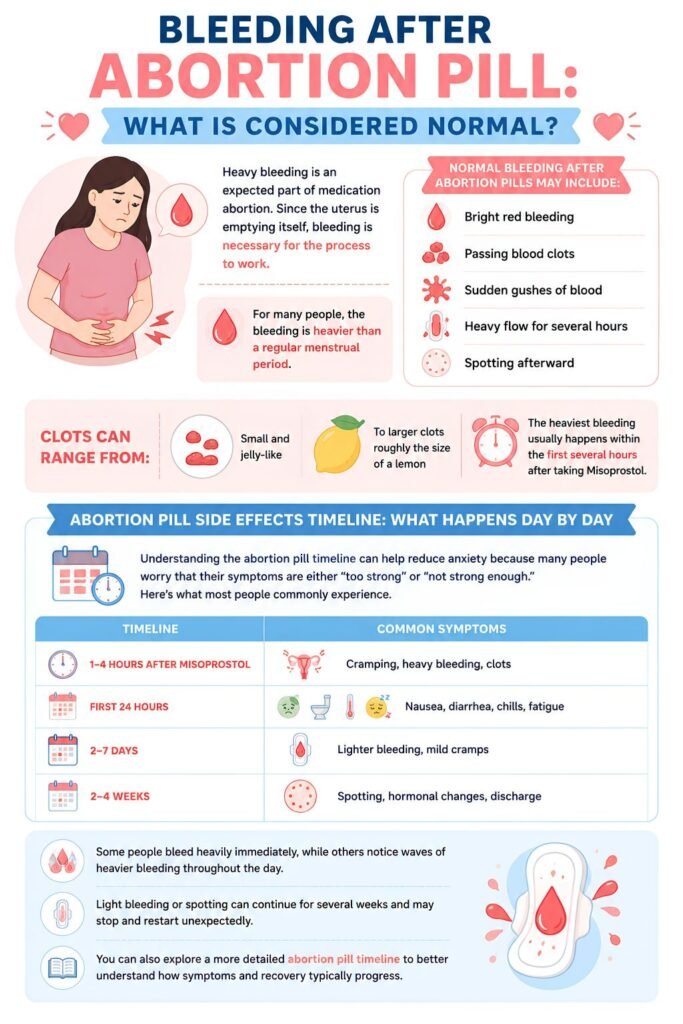
Heavy bleeding is an expected part of medication abortion. Since the uterus is emptying itself, bleeding is necessary for the process to work.
For many people, the bleeding is heavier than a regular menstrual period.
Normal Bleeding After Abortion Pills May Include:
- Bright red bleeding
- Passing blood clots
- Sudden gushes of blood
- Heavy flow for several hours
- Spotting afterward
Clots can range from:
- Small and jelly-like
- To larger clots roughly the size of a lemon
The heaviest bleeding usually happens within the first several hours after taking Misoprostol.
Abortion Pill Side Effects Timeline: What Happens Day by Day
Understanding the abortion pill timeline can help reduce anxiety because many people worry that their symptoms are either “too strong” or “not strong enough.”
Here’s what most people commonly experience.
Some people bleed heavily immediately, while others notice waves of heavier bleeding throughout the day.
Light bleeding or spotting can continue for several weeks and may stop and restart unexpectedly.
You can also explore a more detailed abortion pill timeline to better understand how symptoms and recovery typically progress.
How Long Does Bleeding Last After a Medication Abortion?
This is one of the most searched questions related to medical abortion side effects.
For most people:
- Heavy bleeding lasts several hours
- Moderate bleeding may continue for a few days
- Light bleeding or spotting can last 1–4 weeks
The pattern is not always predictable.
Some people stop bleeding quickly, while others continue spotting longer. Small episodes of bleeding after activity or exercise can also happen during recovery.
What Most People Experience
Many people notice:
- Heavy bleeding during the main process
- Gradual improvement afterward
- Occasional spotting before the next period
Your next menstrual cycle usually returns within 4–8 weeks.
Gastrointestinal Symptoms During Medication Abortion
Digestive symptoms are another very common part of the process. Misoprostol affects smooth muscle tissue, which is why it can temporarily affect the stomach and intestines too.
Common Gastrointestinal Side Effects Include:
- Nausea
- Vomiting
- Diarrhea
- Upset stomach
- Loss of appetite
These symptoms usually:
- Begin shortly after Misoprostol
- Improve within 24 hours
- Resolve without treatment
For some people, nausea is mild. Others may vomit once or twice during the process.
Tips for Managing Nausea and Diarrhea
To feel more comfortable:
- Drink water slowly throughout the day
- Eat bland foods like crackers or toast
- Avoid greasy or spicy meals
- Rest as much as possible
Hydration is especially important if diarrhea or vomiting occurs.
Other Common Side Effects of Abortion Pills
In addition to cramping and bleeding, there are several other common side effects of abortion pills that are considered normal.
Chills and Mild Fever
Many people experience:
- Shivering
- Chills
- Sweating
- Mild fever
These symptoms are especially common after Misoprostol and usually improve within several hours.
A temporary fever below 100.4°F is generally not dangerous if it resolves quickly.
Fatigue and Weakness
Medication abortion can be physically exhausting.
The combination of:
- Hormonal changes
- Blood loss
- Cramping
- Stress
- Sleep disruption
can leave people feeling tired for a day or two afterward.
Some individuals feel ready to resume daily activities quickly, while others need more recovery time.
Headaches and Dizziness
Mild dizziness or headaches may happen because of:
- Hormonal fluctuations
- Dehydration
- Pain
- Temporary blood loss
Resting and drinking fluids can often help reduce these symptoms.
Are Abortion Pill Side Effects Normal? Understanding What’s Expected
One of the hardest parts of medication abortion is not always the symptoms themselves — it’s uncertainty.
Many people ask:
- “Am I bleeding too much?”
- “Should cramps hurt this badly?”
- “Is nausea normal?”
- “Why do my symptoms keep changing?”
The truth is that experiences vary widely.
Some people have:
- Heavy bleeding and strong cramps
- Mild symptoms with manageable discomfort
- Symptoms that come in waves
- Minimal nausea or GI symptoms
Most of these experiences can still be considered normal.
Because the body responds differently to hormonal changes and uterine contractions, there is no single “perfect” medication abortion experience.
What matters most is recognizing the difference between expected recovery symptoms and warning signs that may need medical attention.
Why Medication Abortion Symptoms Can Feel Emotionally Overwhelming
Even when symptoms are medically normal, the experience can still feel intense physically and emotionally.
For many people, the combination of:
- Pain
- Bleeding
- Hormonal changes
- Anxiety
- Lack of certainty
can feel overwhelming for a short period of time.
This is one reason many people look for information about what to expect after taking the abortion pill before starting the process. Knowing what symptoms are common can help reduce fear and make recovery feel more manageable.
Mifepristone and Misoprostol Side Effects Explained Separately
Although people often refer to “the abortion pill” as a single medication, medication abortion usually involves two different medicines that work in different ways. Understanding the difference can make the process feel less confusing and help explain why symptoms change throughout the experience.
The two medications are:
- Mifepristone
- Misoprostol
Each medication has its own role, timing, and possible symptoms.
Side Effects Linked to Mifepristone
Mifepristone is typically taken first. It works by blocking progesterone, the hormone needed to continue a pregnancy.
Many people are surprised that they feel very little after taking this first pill.
Common Symptoms After Mifepristone
Some people experience:
- Mild cramping
- Light spotting
- Nausea
- Fatigue
- Headache
Others notice almost no symptoms at all until taking Misoprostol later.
This can cause unnecessary anxiety because some people assume the medication is not working if they do not immediately bleed. In reality, it is completely normal to have little or no bleeding after Mifepristone alone.
Side Effects Linked to Misoprostol
Misoprostol is usually taken 24–48 hours later. This medication causes the uterus to contract and expel pregnancy tissue, which is why it causes the most noticeable abortion pill side effects.
Common Misoprostol Side Effects Include:
- Strong cramping
- Heavy bleeding
- Blood clots
- Nausea
- Vomiting
- Diarrhea
- Chills
- Fever
- Fatigue
These symptoms are usually strongest within the first several hours after taking the medication.
Many people experience a noticeable reduction in symptoms after passing the pregnancy tissue.
Why Misoprostol Causes Stronger Symptoms
Misoprostol stimulates uterine contractions. These contractions are necessary because they help empty the uterus safely.
This is also why symptoms like:
- Cramping
- Bleeding
- Pelvic pressure
- Diarrhea
can feel intense temporarily.
For many people, the experience comes in waves:
- Cramping increases
- Bleeding becomes heavier
- Clots pass
- Symptoms gradually improve afterward
This pattern is common and expected during medication abortion.
How Individual Factors Affect Abortion Pill Symptoms
No two medication abortions are identical. Several factors can influence how intense symptoms feel.
Factors That May Affect Symptoms Include:
- Pregnancy duration
- Hormone levels
- Body sensitivity to medication
- Previous pregnancies
- Individual pain tolerance
Someone at 5 weeks pregnant may experience different symptoms than someone at 10 weeks, although both experiences can still fall within the normal range.
This is why comparing experiences online can sometimes increase anxiety rather than provide reassurance.
Side Effects of Abortion Pills That May Need Medical Attention
While serious complications are uncommon, it is still important to know which symptoms may signal a problem.
Most people recover without needing emergency care. However, understanding warning signs can help you respond quickly if something does not feel right.
Excessive Bleeding Warning Signs
Bleeding is expected, but extremely heavy bleeding is not.
Seek Medical Attention If You:
- Soak through 2 or more maxi pads per hour for 2 consecutive hours
- Feel faint or unable to stand
- Experience severe dizziness
- Continue passing very large clots for several hours
Heavy bleeding that suddenly becomes worse after improving can also be worth discussing with a healthcare provider.
What Normal Bleeding Usually Looks Like
Normal bleeding after abortion pill use often includes:
- Heavy bleeding for several hours
- Clotting
- Gradual reduction over time
- Spotting afterward
Many people worry when they see clots, but clotting alone does not automatically mean something is wrong.
Severe Pain That Is Not Improving
Strong cramps are expected during medication abortion, especially after Misoprostol. However, pain that becomes unbearable or does not improve may need medical evaluation.
Warning Signs Include:
- Severe abdominal pain not relieved by ibuprofen
- One-sided pelvic pain
- Pain that worsens over time
- Pain accompanied by fainting or fever
Severe one-sided pain can sometimes signal an ectopic pregnancy, which requires immediate medical care.
Fever and Infection Symptoms to Watch For
Mild chills and temporary fever are common shortly after taking Misoprostol. However, symptoms that continue or worsen later may indicate infection.
Contact a Healthcare Provider If You Have:
- Fever above 100.4°F lasting more than 24 hours
- Fever that begins days later
- Foul-smelling vaginal discharge
- Severe weakness
- Persistent vomiting
Infections after medication abortion are uncommon, but early treatment is important if symptoms appear.
What If There Is No Bleeding After Misoprostol?
Many people expect bleeding to start immediately, but timelines can vary slightly.
However, if there is:
- No bleeding at all
- No cramping
- No noticeable symptoms within 24 hours
the medication may not have worked fully.
In this situation, a healthcare provider may recommend:
- Additional Misoprostol
- Follow-up testing
- Ultrasound evaluation
Symptoms That Should Never Be Ignored
Although most common side effects of abortion pills are temporary, certain symptoms require urgent medical attention.
Seek Immediate Medical Care If You Experience:
- Soaking 2+ pads per hour for 2 hours
- Fever lasting longer than 24 hours
- Severe pain that does not improve
- Foul-smelling discharge
- Fainting or difficulty breathing
- No bleeding after Misoprostol
- Severe weakness or confusion
Trust your instincts. If something feels seriously wrong, it is always safer to contact a medical professional.
Managing Abortion Pill Recovery Symptoms at Home
Most people recover from medication abortion safely at home with rest, hydration, and symptom management.
Creating a comfortable recovery environment before taking the pills can make the experience feel significantly less stressful.
Best Ways to Reduce Cramping and Discomfort
Cramping is often strongest during the first several hours after Misoprostol.
Helpful Ways to Manage Pain Include:
- Taking ibuprofen as directed
- Using a heating pad
- Wearing loose, comfortable clothing
- Resting in a comfortable position
- Staying hydrated
Many people find that a heating pad placed on the lower abdomen provides significant relief.
Foods and Drinks That May Help During Recovery
Nausea and fatigue can make eating difficult during the process.
Simple foods are usually easiest to tolerate.
Helpful Options Include:
- Crackers
- Toast
- Rice
- Soup
- Bananas
- Electrolyte drinks
Try eating small amounts slowly rather than forcing large meals.
Avoid excessive alcohol immediately after the abortion because dehydration can worsen dizziness and weakness.
Emotional Recovery After a Medication Abortion
Physical recovery is only one part of the experience.
People can experience many different emotions afterward, including:
- Relief
- Sadness
- Calmness
- Exhaustion
- Anxiety
- Emotional numbness
There is no “correct” emotional response.
Hormonal shifts, stress, lack of sleep, and personal circumstances can all influence emotions during recovery.
Some people feel emotionally normal very quickly, while others need more time to process the experience.
Does Abortion Pill Affect Hormones or Fertility?
Many people worry about long-term effects after medication abortion, especially hormonal health and fertility.
This concern is extremely common, but evidence shows that medication abortion does not usually cause long-term fertility problems.
Temporary Hormonal Changes After Medication Abortion
Pregnancy hormones do not disappear instantly after an abortion.
As hormone levels change, some people experience:
- Breast tenderness
- Mood changes
- Fatigue
- Mild bloating
- Emotional sensitivity
These temporary symptoms usually improve as hormone levels return to baseline.
This is one reason people often ask: does abortion pill affect hormones?
Short-term hormonal fluctuations are expected, but they are typically temporary and not dangerous.
Can the Abortion Pill Affect Fertility in the Future?
Current medical evidence shows that medication abortion does not normally reduce future fertility.
Most people continue to:
- Ovulate normally
- Have future pregnancies
- Maintain regular menstrual cycles
In fact, fertility can return quickly after a medication abortion — sometimes within just a few weeks.
This is why many healthcare providers discuss contraception soon afterward if pregnancy prevention is desired.
You can also learn more about whether the abortion pill affects fertility in the long term.
When Menstrual Cycles Usually Return
For most people:
- A regular period returns within 4–8 weeks
- Spotting may happen before the first cycle
- The first period may feel slightly different than usual
Temporary cycle changes after medication abortion are common and often resolve naturally over time.
Conclusion: Most Abortion Pill Side Effects Are Temporary and Expected
Experiencing cramping, bleeding, nausea, chills, or fatigue after taking abortion pills can feel intense, especially if you are unsure what is normal.
The good news is that most side effects of abortion pills are temporary and expected as the body completes the medication abortion process.
For many people:
- The strongest symptoms improve within 24–48 hours
- Bleeding gradually becomes lighter
- Recovery continues over the following weeks
- Serious complications remain uncommon
Knowing what symptoms are common — and understanding when to seek help — can make the experience feel less frightening and more manageable.
Having accurate information, clear instructions, and access to reliable support can make a significant difference during recovery and help you feel more confident throughout the process.
About the Author

Caroline
Caroline M. Hayes is a healthcare content specialist and writer with a focus on women’s health and patient education. With experience across telehealth and in-person care environments, she creates content that helps individuals better understand their health and make informed decisions with confidence.
Her work focuses on simplifying complex medical topics into clear, accessible, and easy-to-understand information—especially in areas that require sensitivity, privacy, and clarity. She contributes to educational resources designed to support individuals navigating important health choices.
Caroline’s approach combines accuracy, empathy, and clarity, ensuring that health information is both reliable and approachable for a wide audience.
Outside of her professional work, she enjoys yoga, reading, and caring for her growing collection of plants.
All content is created for informational purposes and reviewed to ensure clarity and accuracy